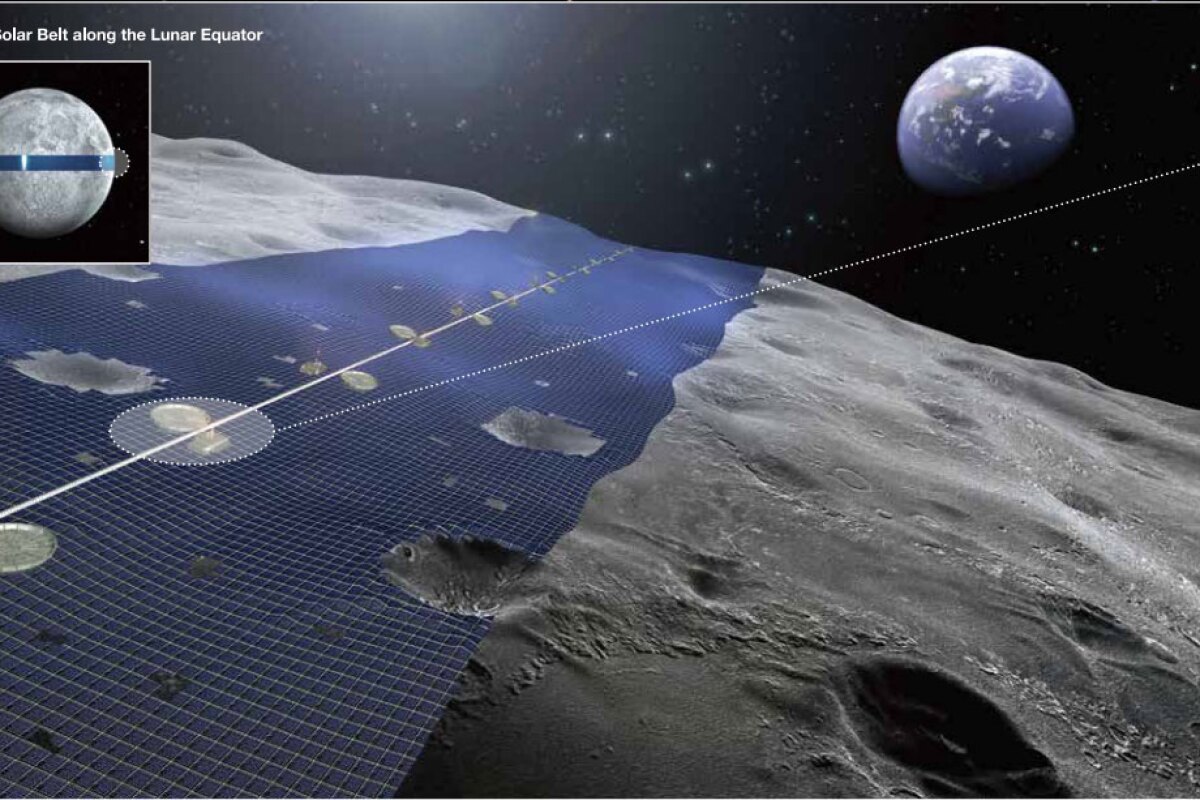
In a bold leap toward unlimited clean renewable energy, a Japanese team has revived plans for the Japan’s Luna Ring—a colossal 6,800-mile solar ring around the moon. Proposed by Shimizu Corporation, this lunar solar power project aims to wrap the Moon’s equator in a vast belt of solar panels, harnessing constant sunlight and beaming energy back to Earth 24/7.
Unlike Earth-based solar farms plagued by weather, clouds, and darkness, the Luna Ring operates in the Moon’s vacuum, delivering uninterrupted power. This Japan moon energy project could transform global energy forever, providing a sustainable alternative post-Fukushima and addressing rising worldwide demand.
Also read:
Scientists Grow Chickpeas in Lunar Soil: Breakthrough in Space Farming and NASA Artemis Missions
China’s Kinetica-2 Rocket Launch 2026: Reusable Space Breakthrough
What Is the Luna Ring? Inside Japan’s Ambitious Lunar Solar Power Vision
The Luna Ring is a 11,000-kilometer (approximately 6,800-mile) solar belt encircling the Moon’s equator, stretching up to 250 miles (400 km) wide at its broadest point. Solar cells would cover this enormous surface, converting perpetual sunlight into electricity.
Shimizu Corporation’s concept uses the Moon’s own resources—regolith turned into concrete, solar cells, and more—minimizing costly Earth launches. Robots controlled from Earth would handle most construction, making this solar ring around the moon feasible despite the extreme environment.

This isn’t science fiction. The Japan Luna Ring project draws from decades of space tech research and gained new attention in 2026 as a real path to energy independence.
How the 6,800-Mile Solar Ring Around the Moon Generates and Transmits Power
Here’s the step-by-step engineering behind the Luna Ring:
- Solar Collection: Panels along the lunar equator capture nonstop sunlight—no atmosphere means zero weather interference.
- Energy Conversion: Electricity travels via power cables to transmission bases on the Moon’s near side (always facing Earth).
- Wireless Transmission: Energy converts to microwaves or high-energy laser beams and beams toward Earth receiving stations (rectennas or laser receivers).
- Earth Integration: Ground facilities convert the beams back to electricity for grids or hydrogen fuel production.
This lunar solar power system could theoretically generate up to 13,000 terawatts—far exceeding current global needs—making it a true game-changer for space-based solar energy.

Construction Breakthrough: Building the Luna Ring With Moon Materials and Robots
Shimizu plans to maximize lunar resources:
- Lunar sand (regolith) produces oxygen, water, concrete, glass, and even solar cells.
- Self-propelled robot factories move along the equator, manufacturing and installing panels on-site.
- Modules assemble in orbit before landing, with remote Earth control enabling 24-hour operations.
This in-situ resource utilization slashes launch costs dramatically, a key innovation for the Japan moon solar project.
Massive Benefits of Lunar Solar Power From the Luna Ring
- 24/7 Reliability: Constant sunlight equals continuous baseload power.
- Clean & Abundant: Zero emissions, unlimited supply for every nation.
- Global Equity: Energy beamed worldwide, potentially stored as hydrogen.
- Earth Preservation: Reduces reliance on fossil fuels and terrestrial land use.
The solar ring around the moon aligns perfectly with humanity’s shift to abundant, eco-friendly energy.

Challenges Facing Japan’s 6,800-Mile Luna Ring Project
While visionary, hurdles remain:
- Scale & Cost: No full budget disclosed; international collaboration essential.
- Lunar Dust: Could coat panels and damage equipment.
- Precision Transmission: Beams must hit Earth targets accurately without safety risks.
- Timeline: Earliest construction targeted for 2035, but still conceptual.
Experts view the Luna Ring as inspirational yet requiring major advances in robotics and space infrastructure.
The Future of Energy: Will the Luna Ring Become Reality?
Japan’s Luna Ring isn’t just a moon project—it’s a blueprint for humanity’s energy future. As Shimizu Corporation pushes lunar solar power forward, it could inspire similar space-based solar energy initiatives worldwide.
If realized, this 6,800-mile solar ring around the moon would end energy scarcity, power AI-driven economies, and secure a clean planet for generations.
The Moon is about to become Earth’s ultimate power plant. Follow the Japan Luna Ring developments as space tech accelerates toward this revolutionary milestone.