







Hurghada is famous for its turquoise waters, coral reefs, and sun-soaked beaches — yet just a few hours distant sits one of the most remarkable open-air museums on the planet. Luxor, the ancient city of Thebes, boasts temples, tombs, and monuments that have endured for over three millennia.
If you’re staying on the Red Sea coast, embarking on a hurghada to luxor day trip is among the most fulfilling excursions you can undertake — one that will linger in your memory long after you return home.
Why Luxor Should Be on Every Hurghada Visitor’s List
Many travelers come to Hurghada solely for the beach — and with good reason. The resort town delivers world-class diving, snorkeling, and water sports. Yet confining yourself to the coast means overlooking what Egypt is most celebrated for: its ancient civilization. Luxor houses roughly one-third of all the ancient monuments on earth. From the immense Karnak Temple Complex to the enigmatic Valley of the Kings, this city stands in a league of its own.
Unlike Cairo — which demands considerably more travel time — Luxor is reachable as a genuine day trip. You can depart your hotel in the morning, enjoy a full and enriching day exploring pharaonic marvels, and be back at your resort by dinnertime. Whether you’re a devoted history buff or simply intrigued, the magnitude and splendor of Luxor’s ruins deliver an experience that photographs simply can’t convey.
And if you’re already arranging other outings — perhaps a leisurely afternoon at orange beach hurghada — you’ll discover that a Luxor day trip fits seamlessly into your schedule as a striking cultural counterpoint to your coastal days.
How to Get from Hurghada to Luxor: Bus, Car, or Tour?
The distance between Hurghada and Luxor is roughly 290 kilometers (about 180 miles), and there are several ways to make the trip:
- Private Car or Minivan: The most comfortable choice. A direct drive through the Eastern Desert takes around 3 to 3.5 hours. You travel at your own rhythm and can pause en route.
- Public Bus: Buses operate between the two cities and are very budget-friendly, but they can be slow, less comfortable, and not ideal if you aim to maximize your time at the sites.
- Organized Day Tour: By far the most popular and sensible option for tourists. A guided tour covers transport, an Egyptologist guide, entrance fees, and a structured itinerary — removing all planning stress from your shoulders.
For most visitors, an organized small-group or private tour strikes the best balance of comfort, value, and convenience. You receive expert commentary at every location, skip the nuisance of arranging local transport in Luxor, and return safely to Hurghada come evening.
Top Landmarks to Visit in Luxor in One Day
One day is sufficient to cover the highlights, provided you plan efficiently. Here are the essential landmarks:
- Karnak Temple Complex: The largest religious edifice ever built. Dedicated to the god Amun, its construction spanned over 2,000 years. The Hypostyle Hall — a forest of 134 colossal columns — is breathtaking.
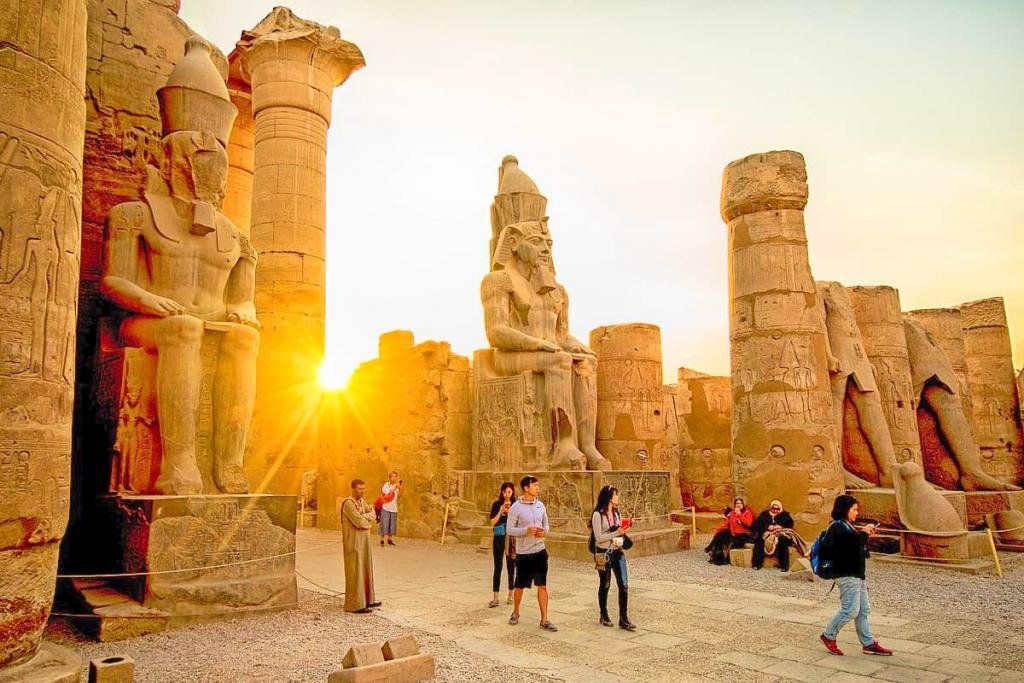
- Luxor Temple: Situated in the heart of the city, this beautifully illuminated temple (especially stunning at sunset) was erected by Amenhotep III and later enlarged by Ramesses II.
- Valley of the Kings: On the West Bank, this royal necropolis contains the tombs of pharaohs including Tutankhamun and Ramesses VI. Most entry tickets grant access to three tombs.
- Temple of Hatshepsut: A magnificent mortuary temple carved into the cliffs of Deir el-Bahari, dedicated to one of Egypt’s most formidable female pharaohs.
- Colossi of Memnon: Two towering statues of Amenhotep III that welcome you as you near the West Bank. An ideal quick stop for photographs.
East Bank vs. West Bank: How to Split Your Time
Luxor is divided by the Nile into two distinct zones, each possessing its own character and attractions:
East Bank — The City of the Living
The East Bank is where the sun ascends and where ancient Egyptians erected their temples to the gods. This represents the more urban side of Luxor, home to Karnak Temple and Luxor Temple, along with the vibrant Luxor Museum. Most visitors commence their day here while energy levels remain high.
West Bank — The City of the Dead
The West Bank, where the sun descends, was regarded as the realm of the dead. Here you’ll encounter the Valley of the Kings, the Valley of the Queens, the Temple of Hatshepsut, and the Colossi of Memnon. Crossing the Nile by felucca or motorboat is an experience unto itself.
A well-planned day trip typically covers the West Bank in the morning (before the heat intensifies) and the East Bank temples during the afternoon and early evening. Your guide will help fine-tune the sequence based on opening hours and crowd levels.
Guided Tours vs. Independent Travel to Luxor
Both approaches are feasible, but each suits a different style of traveler:
- Independent Travel: Attracts those who favor flexibility. You can rent a car, engage a local driver in Luxor, and proceed at your own pace. However, navigating sites without context can result in missing the rich stories woven into every carving and inscription. You’ll also need to manage tickets, inter-site transport, and logistics on your own.
- Guided Tours: Perfect for most visitors. A licensed Egyptologist animates the sites with historical narratives, highlights details you’d never spot alone, and handles all logistics. Small-group tours also let you connect with fellow travelers while keeping the experience personal.
If you’re pressed for time and want to extract the most from a single day, a guided tour is almost always the wiser investment. An experienced guide’s knowledge turns a stroll among ruins into a passage through living history.
What to Eat and Where to Stop Along the Way
The drive across the Eastern Desert presents sparse but dramatic scenery. Most organized tours include a meal stop, often at a local restaurant in Luxor serving traditional Egyptian cuisine. Anticipate dishes such as:
- Koshary: Egypt’s cherished street food — a hearty blend of rice, lentils, pasta, and tomato sauce.
- Grilled meats and kebabs: Frequently accompanied by flatbread, fresh salads, and tahini.
- Ful medames: Slow-cooked fava beans, a timeless Egyptian staple.
- Fresh juices and mint tea: Ideal for staying hydrated in the warmth.
If you’re traveling independently, the road between Hurghada and Luxor features a handful of rest stops with basic food and beverages. It’s prudent to carry snacks and ample water regardless, particularly during the summer months.
Practical Tips: Cost, Distance, and What to Pack
Distance and Travel Time
Hurghada to Luxor is roughly 290 km by road, consuming 3 to 3.5 hours each way depending on traffic and the route taken. The full round trip amounts to a long but thoroughly manageable day.
Approximate Costs
- Organized group day tours: generally span $50 to $120 USD per person, encompassing transport, guide, and most entrance fees.
- Private tours: higher cost but completely tailored to your timetable.
- Entrance fees if going independently: Valley of the Kings (around $20–25), Karnak ($15), Luxor Temple ($10–15).
What to Pack
- Comfortable, lightweight, and modest attire (shoulders and knees covered as a sign of respect for cultural norms)
- Sun hat or scarf and high-SPF sunscreen
- Sturdy, closed-toe walking shoes
- Plenty of water — at least 1.5 to 2 liters per person
- Camera and/or fully charged phone
- Cash in Egyptian pounds for tips, small purchases, and optional add-ons
- A small backpack or day bag to keep your hands free
Best Time to Visit
October through April represents the most pleasant season for a Luxor day trip, featuring mild temperatures and clear skies. Summer months (June to August) can be fiercely hot, with temperatures surpassing 40°C (104°F) in Luxor — early morning departures and frequent hydration become essential if you travel during this window.
One More Option: Cairo from Hurghada
If you’re seeking an even more ambitious excursion and wish to witness the Pyramids of Giza or the Egyptian Museum, contemplate a hurghada to cairo day trip by plane. A brief domestic flight links the two cities in under an hour, making it feasible to experience the paramount highlights of ancient and modern Egypt all within a single action-packed day.
Final Thoughts
A day trip from Hurghada to Luxor transcends a mere sightseeing outing — it’s a voyage across millennia. From the soaring hypostyle columns of Karnak to the painted chambers of pharaonic tombs, every hour in Luxor bears the weight of thousands of years of history. With modest planning and the right tour, you can experience it all comfortably within a single day, returning to your hotel filled with profound wonder and a camera overflowing with unforgettable images.
Don’t allow your Hurghada holiday to revolve solely around the beach — extraordinary as it is. The ancient wonders of Luxor await, just a road trip away.