








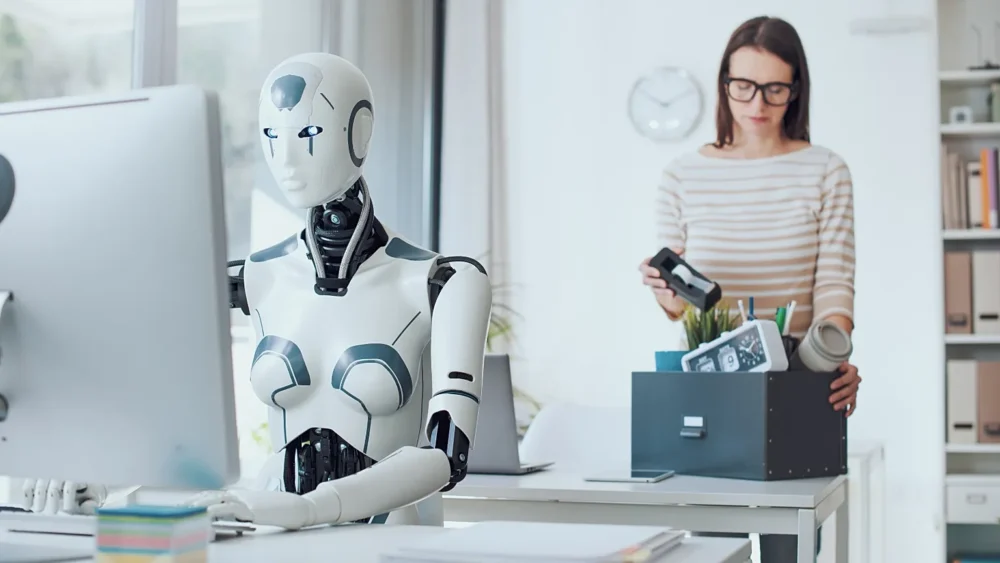
In a major wake-up call for the future of work, a groundbreaking new study has confirmed what many feared: AI job risk is far greater for women than men. Women dominate the occupations most vulnerable to AI automation, with new data showing they make up a staggering 83% of workers in the top 15 most AI-exposed jobs in the US—despite comprising just 47% of the overall workforce.
This isn’t just a US issue. Global reports from the International Labour Organization (ILO) and others echo the same alarming trend: women’s jobs are nearly three times more likely to be transformed or displaced by AI than men’s. As artificial intelligence reshapes industries in 2026, the gender gap in AI job displacement is widening fast—and women of color are hit hardest.
The Shocking Stats: Women Overrepresented in AI-Vulnerable Jobs
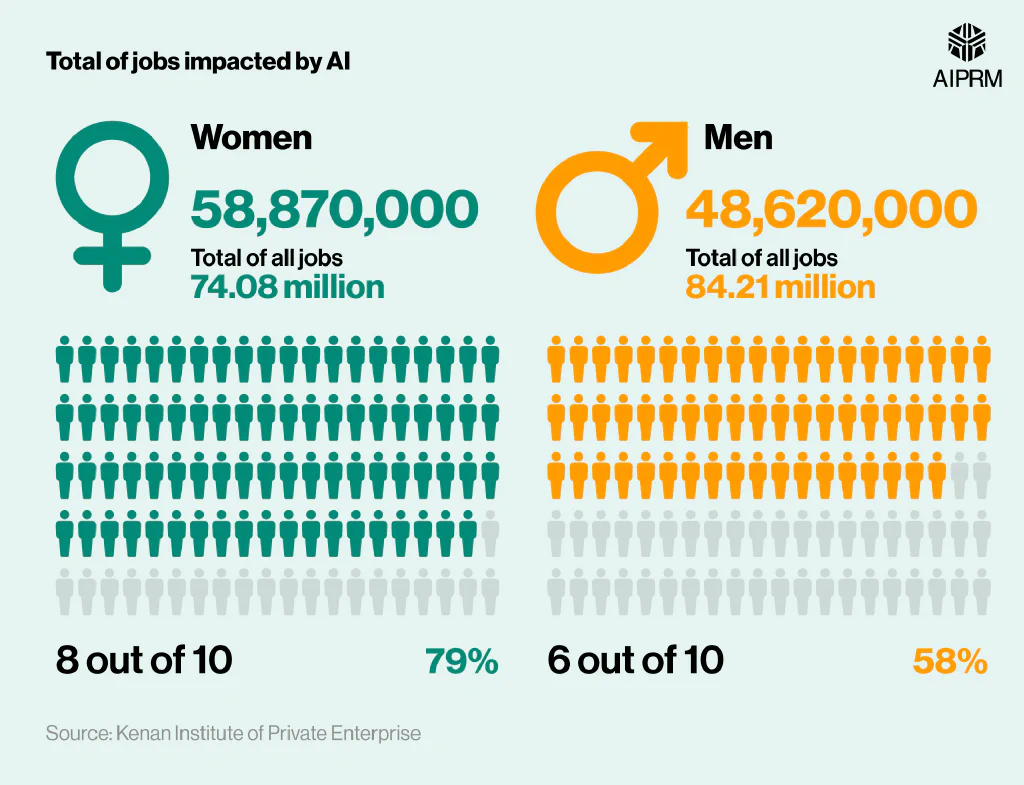
According to the National Partnership for Women & Families’ report AI and Emerging Risks for Women Workers (released May 2026), women account for more than 8 in 10 workers (over 80%) in the most AI-vulnerable occupations. Women of color make up more than 30% of those at highest risk.
Other recent analyses paint an even clearer picture:
- 79% of employed women in the US hold high-risk positions for AI automation, compared to just 58% of men.
- In high-income countries, 9.6% of women’s jobs face the highest automation risk—nearly triple the 3.5% for men.
- Over 6.1 million US workers in roles most likely to be disrupted by AI are women (86% of the total vulnerable group).
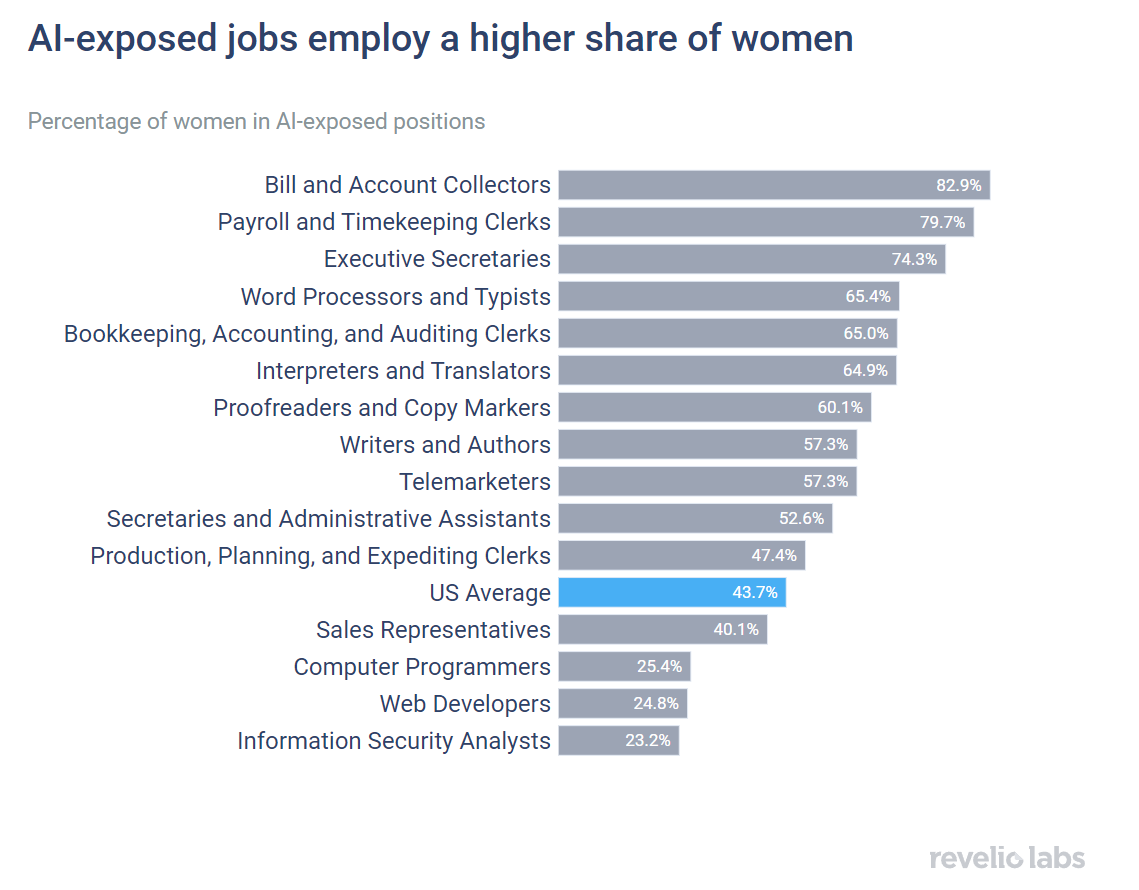
Common roles at risk include secretaries, administrative assistants, office clerks, receptionists, payroll clerks, and data entry positions—jobs where women have historically been overrepresented due to long-standing workplace patterns.
Why Women’s Jobs Face Greater AI Risk Than Men’s
The disparity isn’t random. AI excels at automating repetitive, routine, and data-driven tasks—exactly the kind found in many female-dominated clerical and administrative roles. In contrast, male-dominated fields like construction, plumbing, electrical work, and certain manual trades rely more on physical dexterity and on-site problem-solving, which current AI struggles to replicate fully.
Experts warn this could reinforce decades of economic inequities. Jocelyn Frye, president of the National Partnership for Women & Families, stated: “AI is beginning to influence and change American workplaces, at a time when we still have so much work to do to create workspaces that are equitable and fair for women, especially women of color. Because women are significantly overrepresented in positions such as secretaries, office clerks and receptionists, they will be uniquely affected by this technology.”
Tanya Goldman, senior fellow at the same organization, added: “Right now, too many workers are navigating the use of AI in their workplaces without proper protections in place. Lawmakers have an opportunity – and a responsibility – to set clear rules that both support the responsible use of these tools and protect workers from harm.”
Global Perspective: AI Automation Hits Women Harder Worldwide
The trend goes far beyond the US. The ILO’s 2026 research brief confirms female-dominated occupations are almost twice as likely to be exposed to generative AI, with women facing higher risks in both high-income and developing economies.
Women also remain underrepresented in AI development itself (only about 30% of the AI workforce globally), meaning they have less influence over how these tools are designed and deployed.
Opportunities Amid the Risk: How Women Can Future-Proof Their Careers
While the data on AI job displacement for women is concerning, it’s not all doom and gloom. AI is transforming jobs more than eliminating them outright—similar to how calculators didn’t replace accountants or the internet didn’t kill journalism.
Here are actionable steps to stay ahead in the AI era:
- Upskill in AI literacy: Learn prompt engineering, data analysis, and AI tools relevant to your field. Women who actively use AI at work report higher productivity and career confidence.
- Focus on irreplaceable human skills: Emphasize creativity, emotional intelligence, complex problem-solving, and leadership—areas where AI still falls short.
- Target growing sectors: Move into roles combining AI with human-centered fields like healthcare coordination, education tech, or ethical AI oversight.
- Advocate for protections: Support policies for AI transparency, reskilling programs, and equitable workplace standards.

The Bottom Line: Addressing the AI Gender Gap Now
The 2026 studies are clear—AI poses a greater job risk to women than to men, driven by occupational segregation rather than any inherent difference in ability. Without proactive measures from governments, companies, and individuals, the technology could widen existing pay and opportunity gaps.
As AI continues to evolve at lightning speed, the real question isn’t whether it will change work—it’s whether we’ll ensure the change benefits everyone equally. Women aren’t just at higher risk; they’re also poised to lead the way in building a more inclusive AI-powered future.