







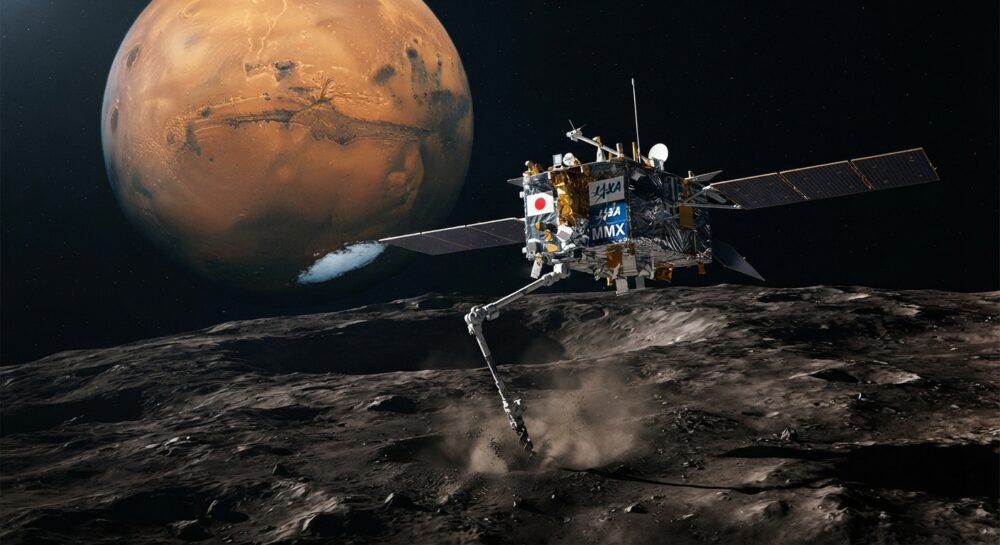
What if the moons of Mars are not what scientists have long assumed? Japan has launched a spacecraft on a groundbreaking journey to answer one of the solar system’s biggest mysteries. On October 19, 2026, the Japan Aerospace Exploration Agency (JAXA) successfully sent its Martian Moons Exploration (MMX) spacecraft toward Mars moon Phobos to collect samples and return them to Earth.
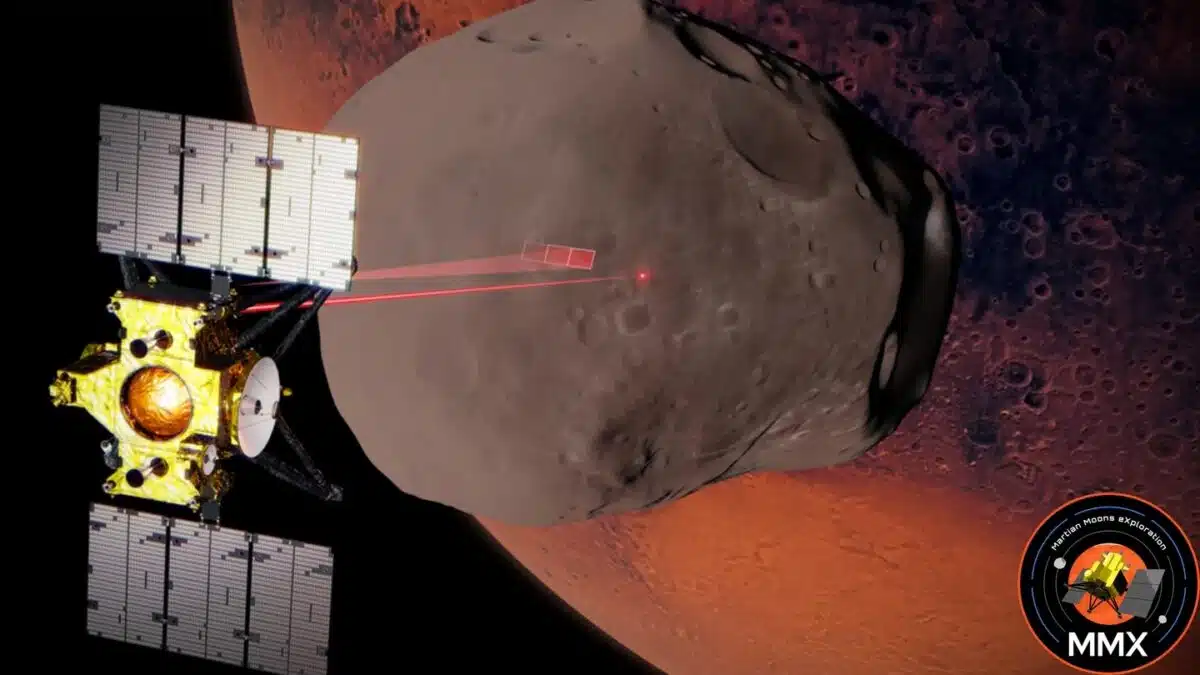
This is the world’s first mission designed to land on a Martian moon, gather rocky material, and bring it home. The JAXA MMX mission aims to collect around 10 grams of rock from Phobos — a tiny amount that could transform our understanding of how Mars’ moons formed and even provide fresh insights into the history of Mars itself.
The spacecraft is currently traveling roughly 140 million miles (225 million kilometers) and is expected to arrive at Mars in August 2027.
Why Japan Is Sending a Spacecraft to Collect Samples from Phobos
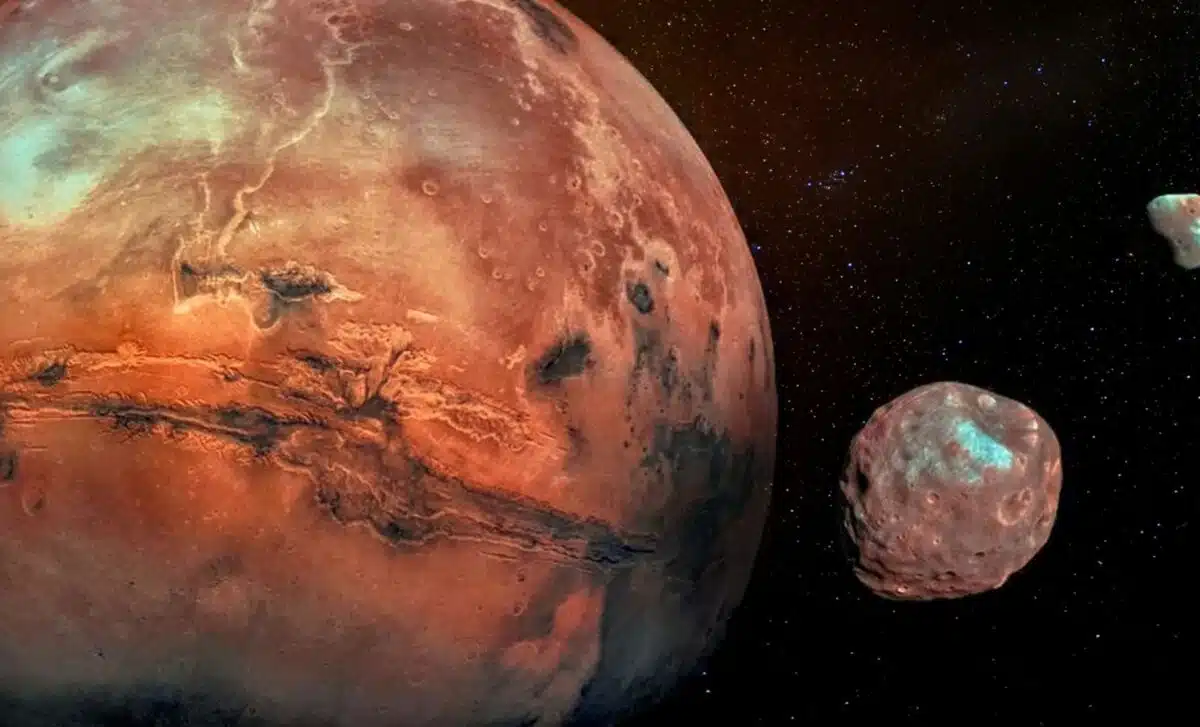
Phobos and its smaller sibling Deimos have puzzled astronomers since Asaph Hall discovered them in 1877. Phobos measures about 14 miles (22 kilometers) across, while Deimos is only about 7.5 miles (12 kilometers) wide. Both are irregularly shaped and orbit close to Mars.
Scientists have two leading theories about their origins:
- They were once asteroids or comet-like objects captured by Mars’ gravity.
- They formed from debris after a massive impact on Mars.
The Phobos sample return mission is designed to settle this debate. Material collected directly from the surface can reveal whether the moons contain pieces of ancient Mars or organic compounds and hydrated minerals typical of captured asteroids.
NASA scientist Tom Statler noted that uncovering the moons’ origin will provide new insights into the history of both Mars and Earth. If the samples contain Martian material, they could offer a cleaner look at the planet’s geological past than meteorites that have traveled through Earth’s atmosphere.
How the JAXA MMX Mission Will Land and Collect Samples
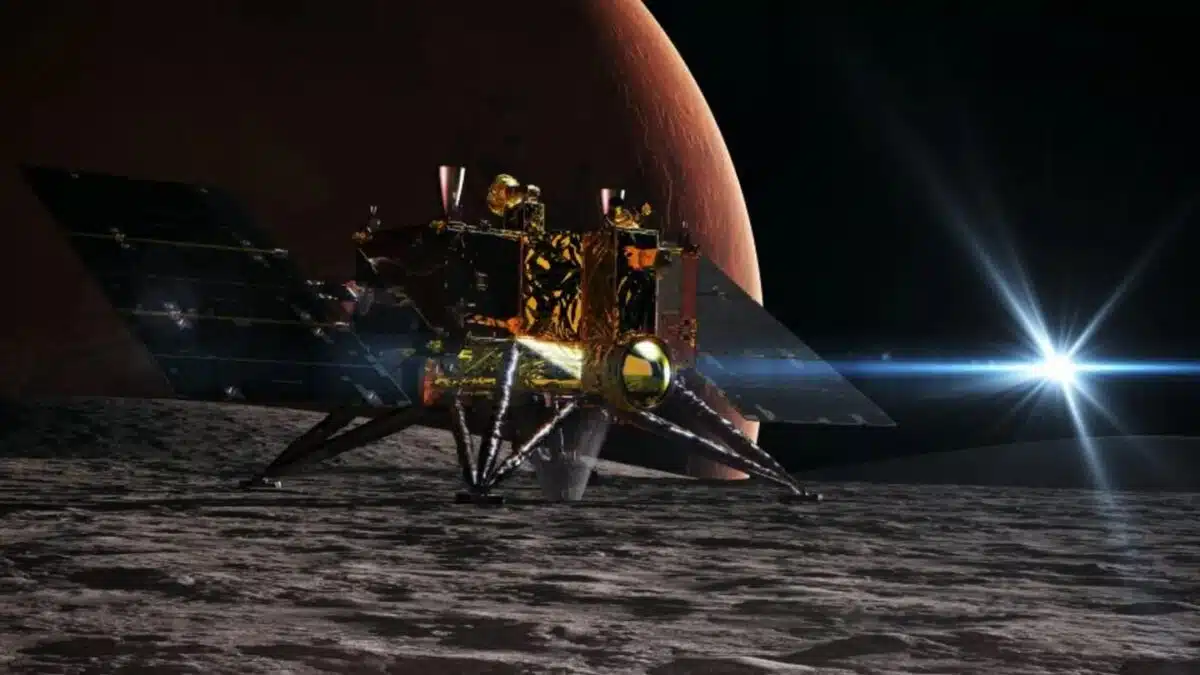
Landing on Phobos is extremely challenging because of its very weak gravity. The moon’s gravity is so low that objects weigh a fraction of what they do on Earth.
Before the main spacecraft attempts to land, it will release Idefix, a small rover built by the French and German space agencies. On Earth, Idefix weighs about 55 pounds (25 kilograms), but on Phobos its effective weight will be only about half an ounce (15 grams). The rover will help study the surface and support safe landing operations.
The MMX spacecraft will then use two sampling systems: a drill and a Pneumatic Sampler developed by Honeybee Robotics for NASA. JAXA aims to collect roughly 10 grams of material — about twice the amount returned by Japan’s earlier Hayabusa2 mission from asteroid Ryugu.
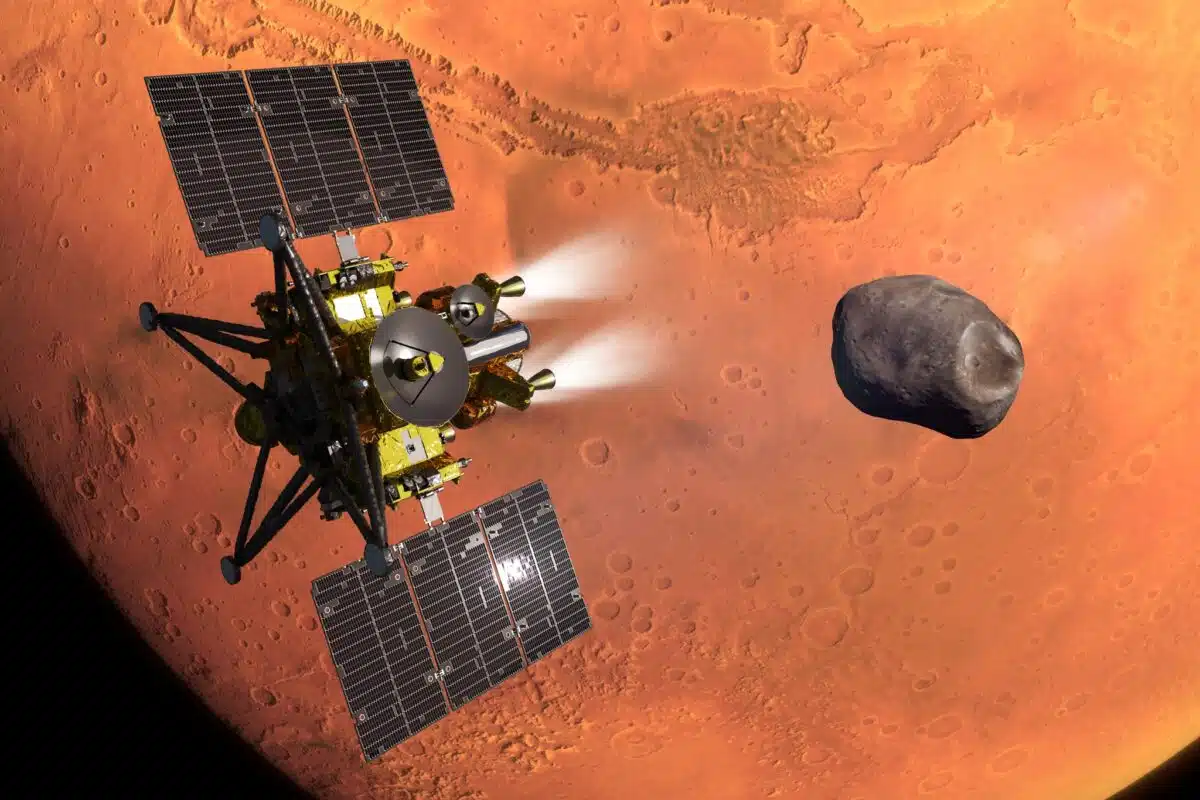
Sampling is planned for late 2028 to early 2029. After collecting the samples, the spacecraft will conduct close flybys of Deimos, study Mars’ atmosphere, and then depart the Mars system in late 2030. It is scheduled to return to Earth in 2031, where NASA will receive up to 15% of the collected material for analysis.
What the Phobos Samples Could Reveal About Mars and the Solar System
The Martian Moons Exploration MMX mission is more than a moon sample return. Equipped with nearly a dozen sensors and instruments, the spacecraft will also examine how dust and water move in Mars’ atmosphere and how atmospheric material escapes into space.
If Phobos formed from impact debris, some of the returned rocks could contain pieces of the ancient Martian surface. If it was a captured asteroid, the samples may hold organic compounds and hydrated minerals that help scientists understand the delivery of water and building blocks of life to the inner solar system.
Astronomer Sonia Fornasier of the Paris Observatory described the mission as “a transformative leap in our capacity to investigate the Martian system.”
Key Timeline of the Japan MMX Mission
- October 19, 2026: Launch aboard Japan’s H3 rocket from Tanegashima Space Center
- August 2027: Expected arrival at Mars
- Late 2028 – early 2029: Planned sample collection from Phobos
- Late 2030: Departure from the Mars system after Deimos flybys
- 2031: Return to Earth with samples
The JAXA Phobos sample return is an international effort involving NASA, ESA, and other partners. It builds on Japan’s successful asteroid sample-return missions and marks a major step toward understanding the Martian system.
Those few grams of rock, traveling 140 million miles, could finally answer a question scientists have debated for more than a century: where did Mars’ mysterious moons come from?