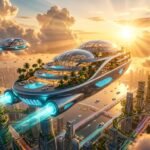






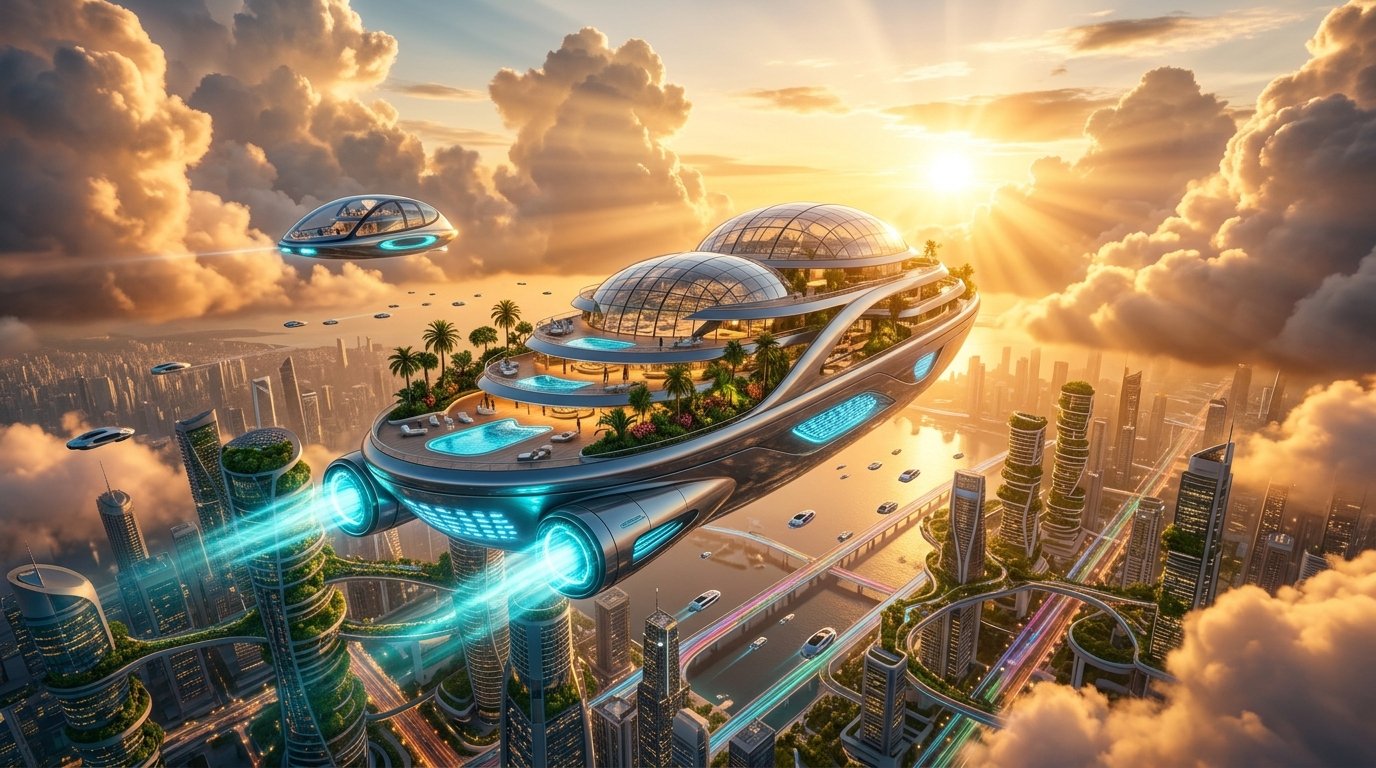
By 2050, more than two-thirds of humanity will live in urban centers—and the cities we know today are preparing for a dramatic vertical transformation. Rather than sprawling outward across valuable ecosystems, the futuristic city skyline 2050 reaches skyward with living green towers, interconnected aerial highways, and floating luxury vessels gliding silently above the clouds.
From a multi-deck luxury sky cruise concept to self-sustaining megastructures, here are 10 visionary concepts redefining architecture, aviation, and the future of urban tourism 2050.
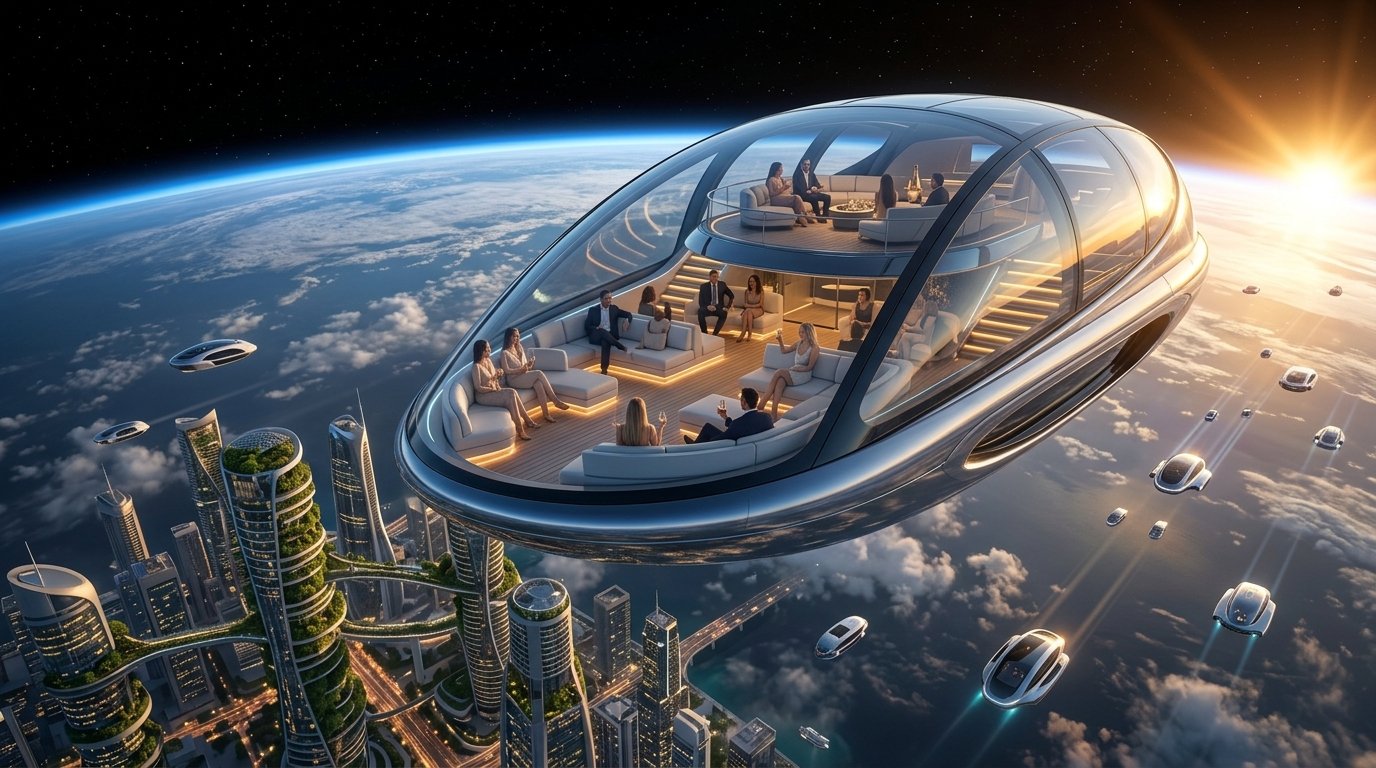
1. Glass-Domed Luxury City Air Cruises
Imagine booking a weekend sunset voyage not on the ocean, but 2,000 feet above a glowing megacity. A luxury sky cruise concept replaces noisy jet engines with whisper-quiet electric propulsion and aerodynamic lift. Featuring multi-level panoramic glass decks, rooftop observation lounges, and fine-dining sky decks, these vessels offer uninterrupted 360-degree skyline views without touching a runway.
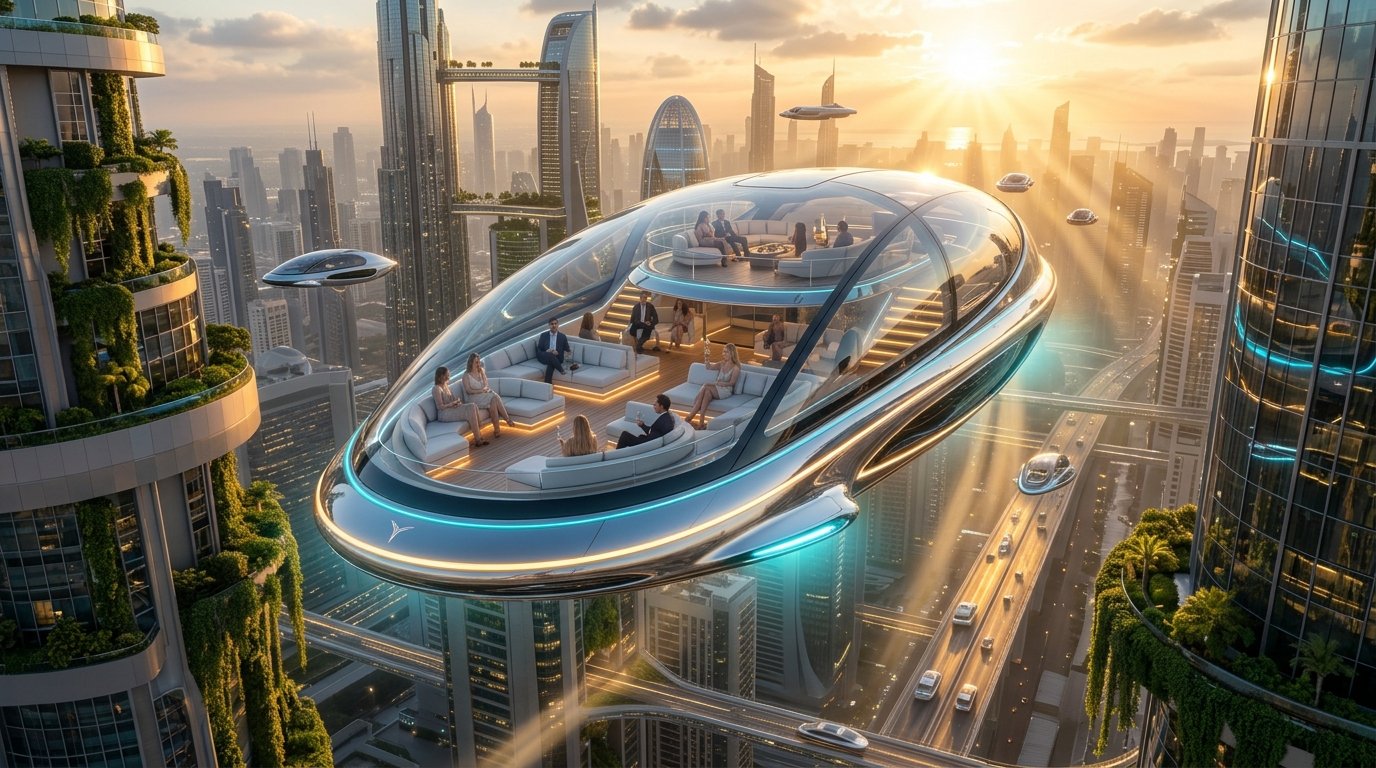
2. Nuclear & Solar-Powered Flying Hotel Airships
Taking aerial hospitality even further, the flying hotel airship acts as a permanent airborne resort capable of staying aloft for months at a time. Powered by clean fusion or ultra-efficient solar skins, these colossal sky liners feature infinity pools overlooking the clouds, wellness spas, and docking bays where smaller electric pods ferry guests back and forth to city skyports.
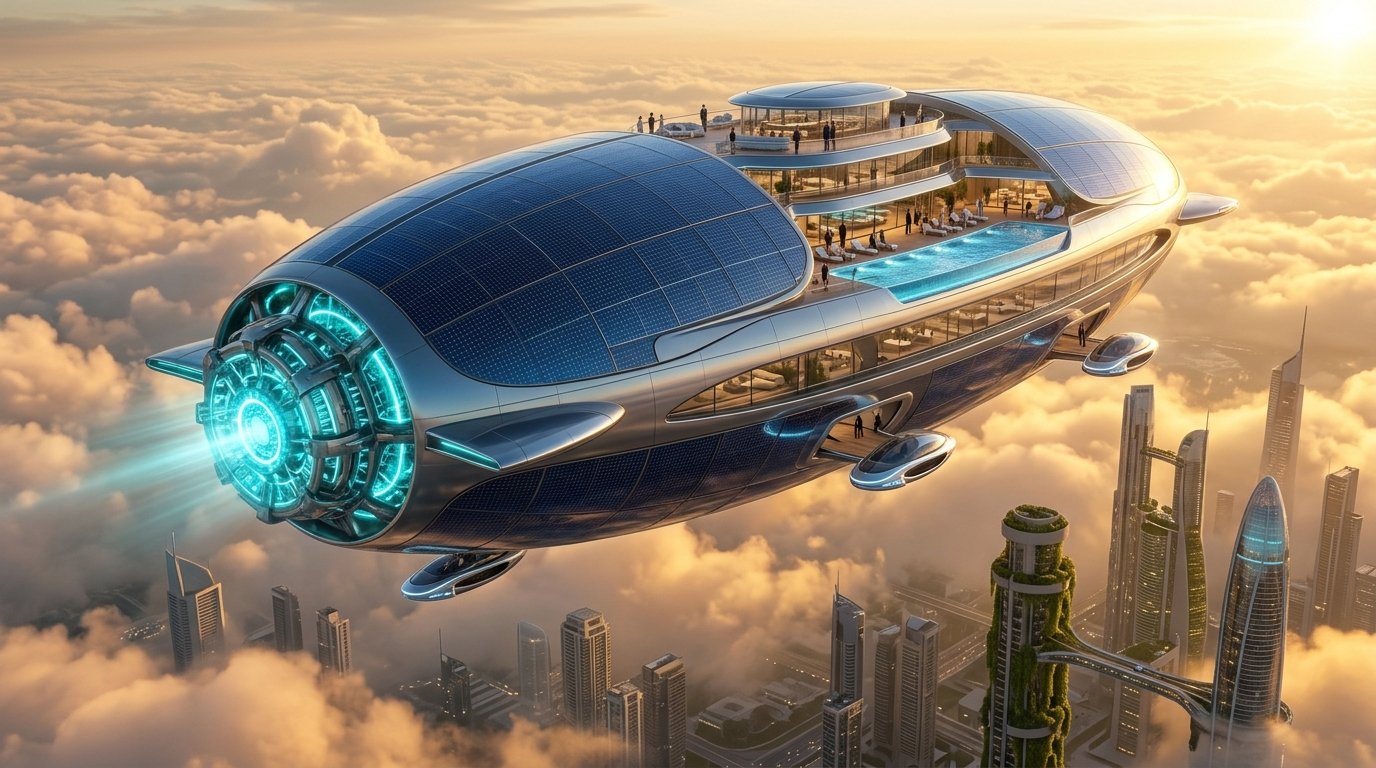
3. Biophilic Vertical Forest Skyscrapers
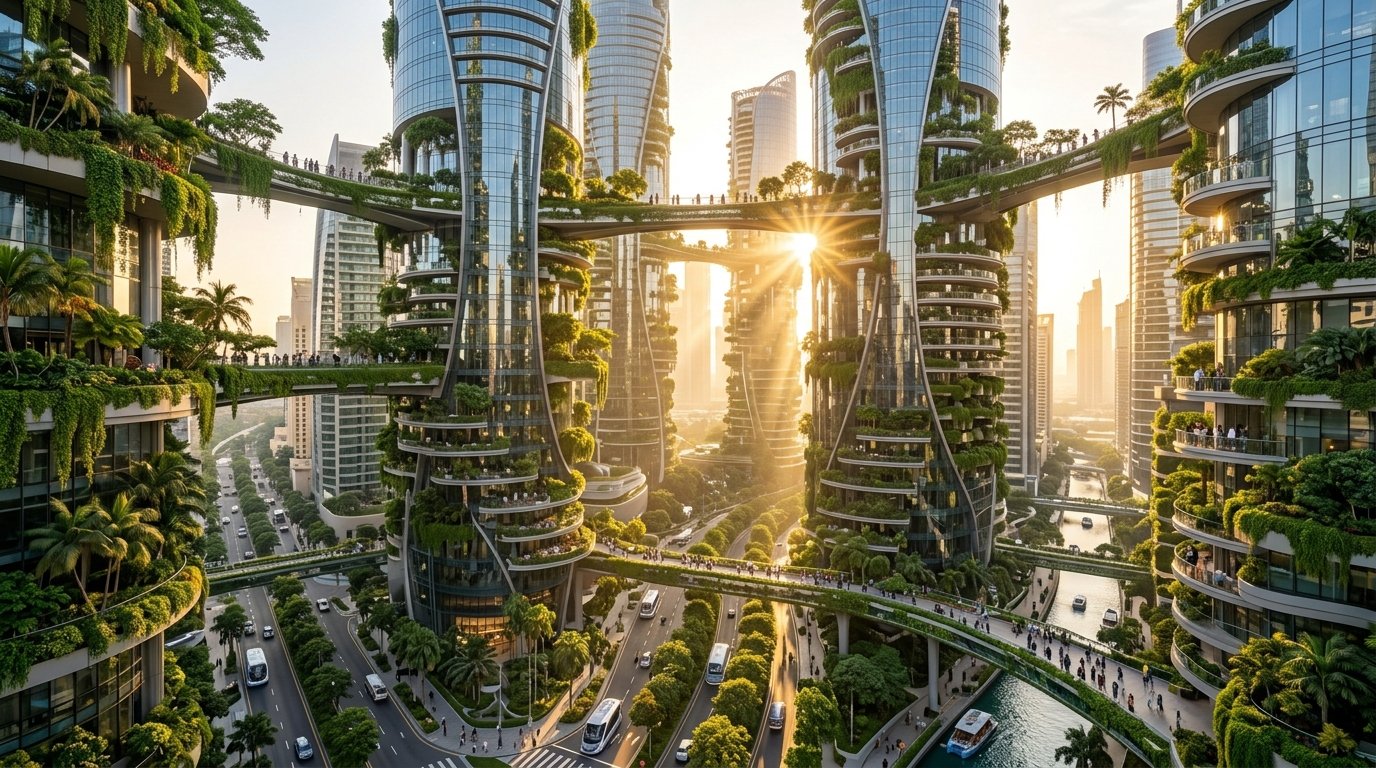
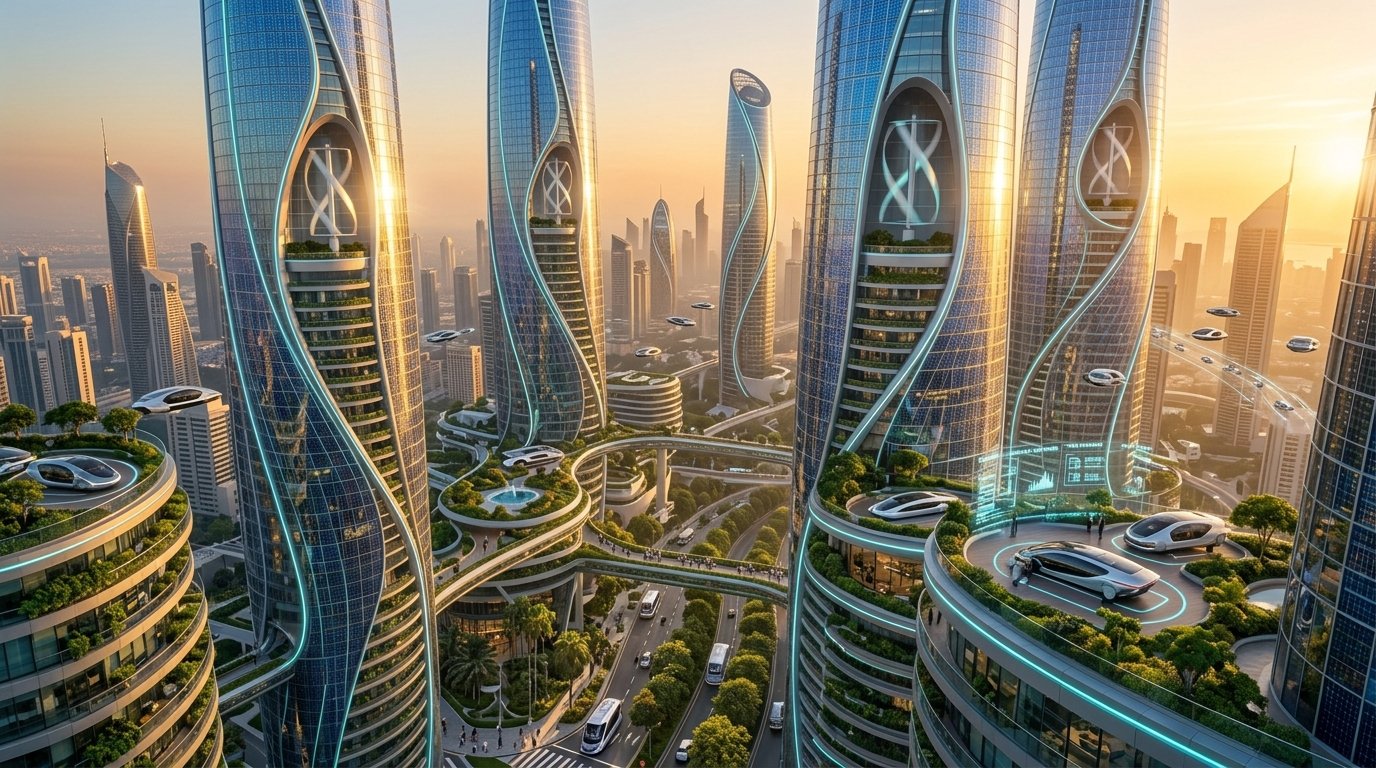
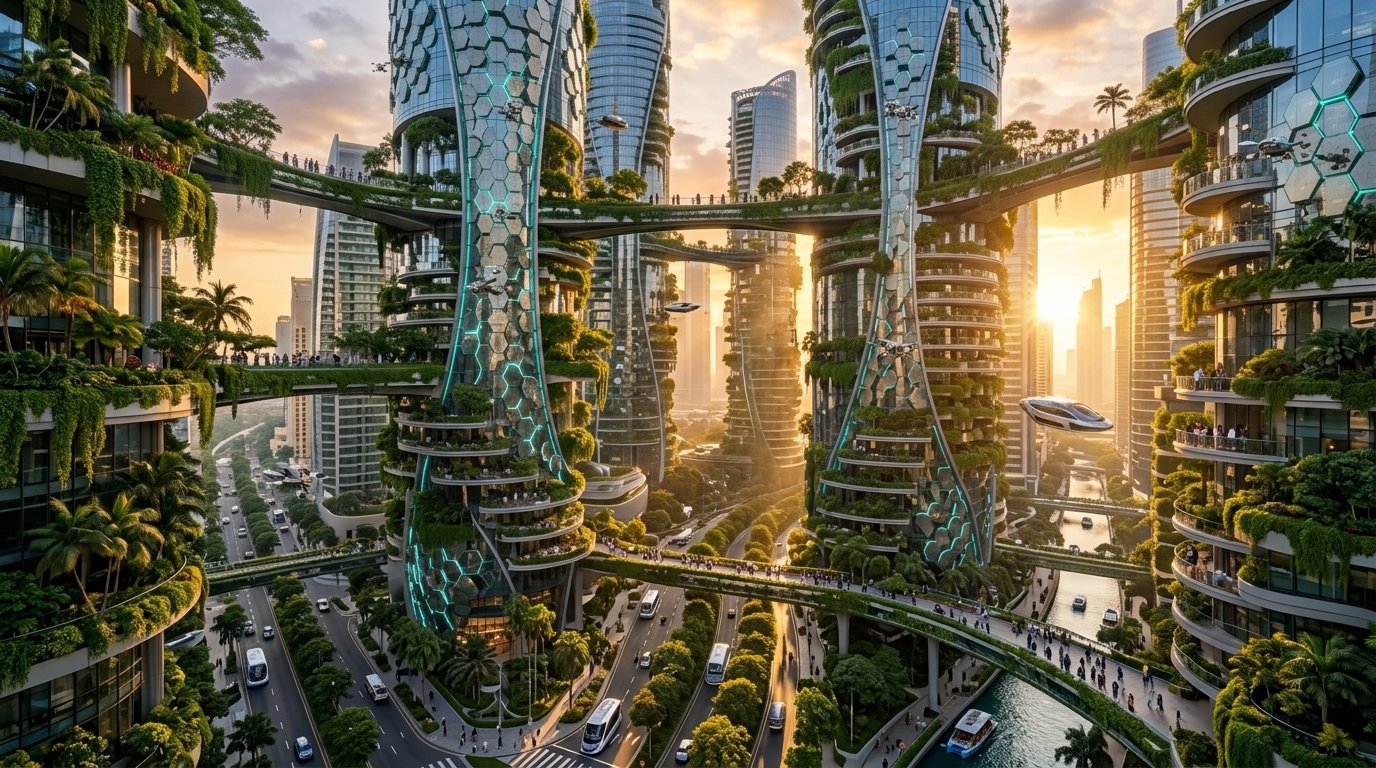
Concrete jungles are giving way to living ecosystems. Vertical forest skyscrapers integrate thousands of trees, hanging gardens, and hydroponic farms directly into supertall facades. Beyond creating a breathtaking vi sual silhouette for the futuristic city skyline 2050, these living towers naturally filter urban air pollution, absorb carbon dioxide, and cool surrounding neighborhoods by several degrees.
4. Multi-Level Floating Sky Bridges & Elevated Parks
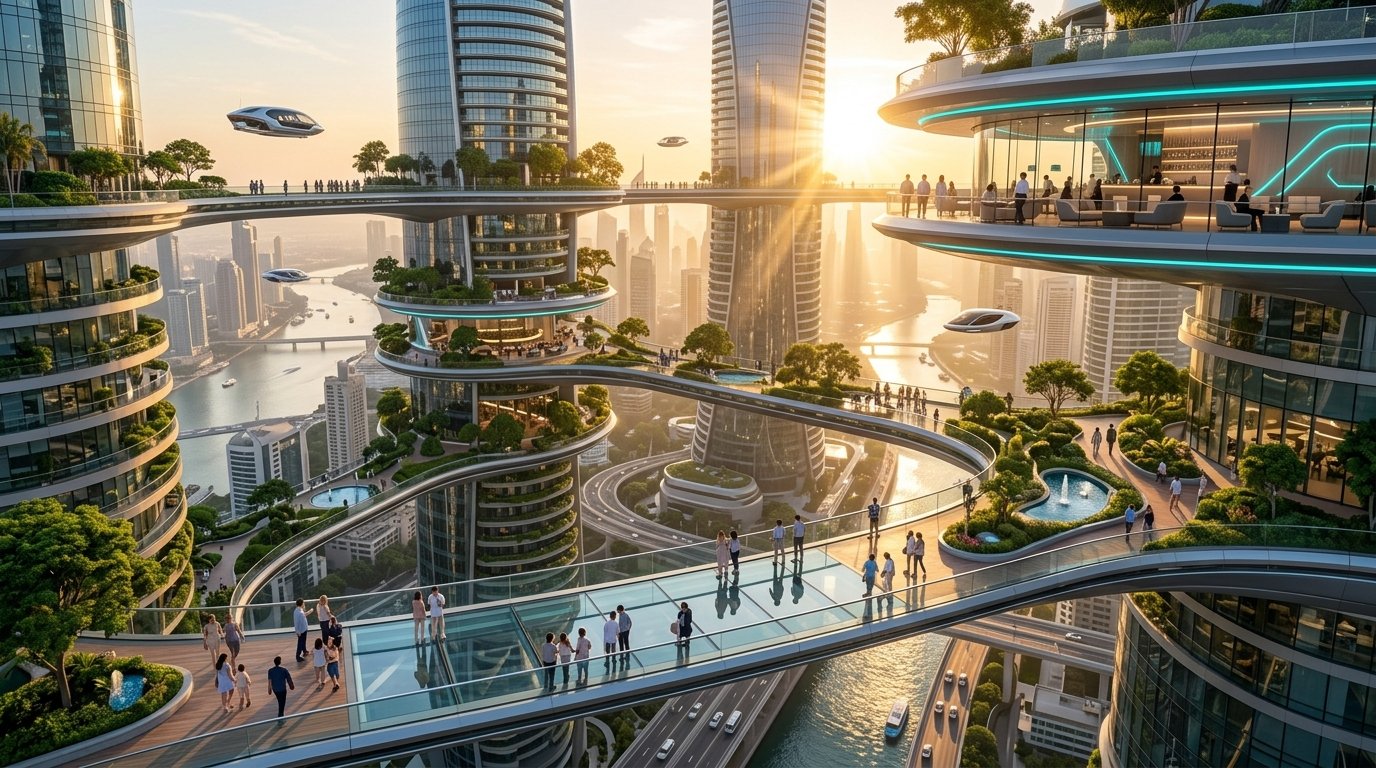
In 2050, pedestrians won’t have to descend to street level just to cross between buildings. Floating sky bridges—engineered with lightweight carbon-nanotube trusses and transparent smart glass—link supertall towers hundreds of meters in the air. Many double as elevated botanical parks, jogging tracks, and open-air cafes suspended above the bustling avenues below.
5. Autonomous Aerial Transit Corridors
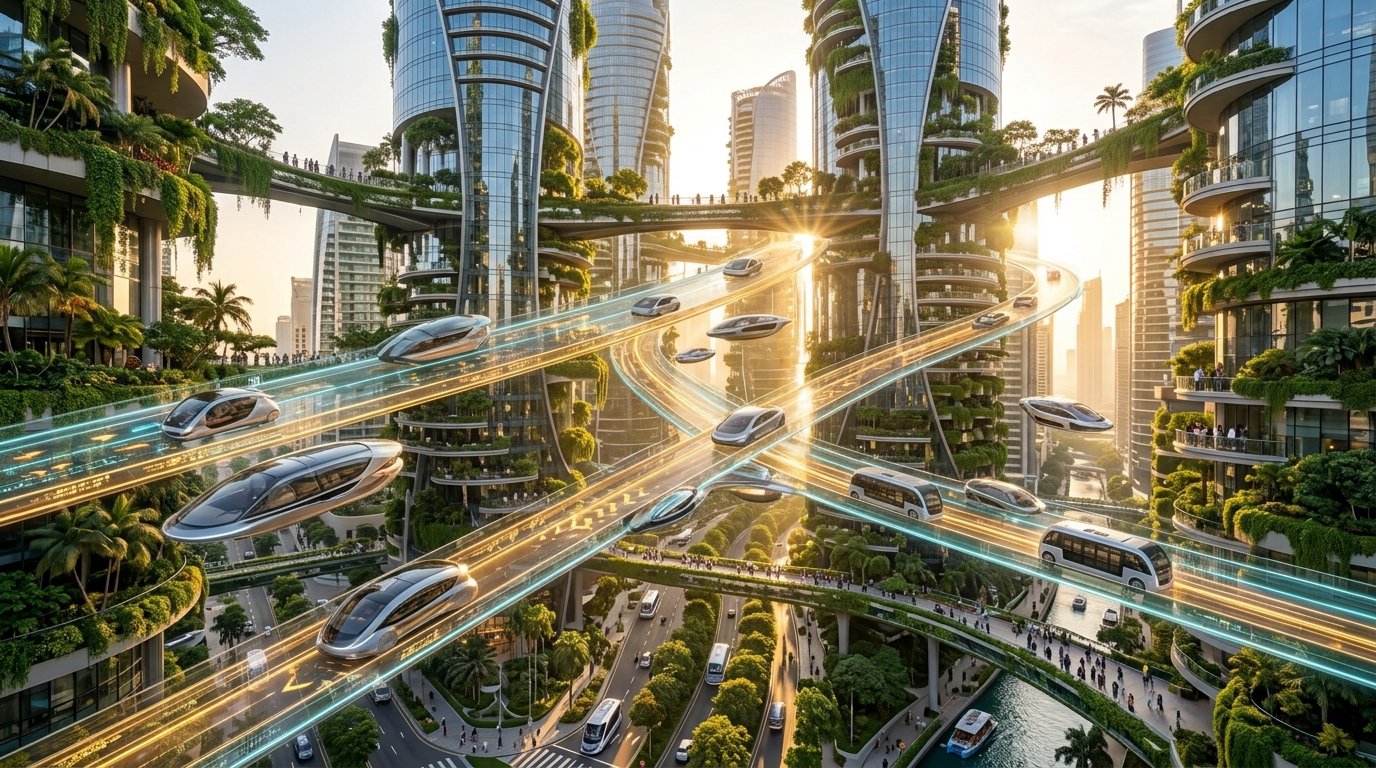
Ground-level gridlock becomes a relic of the past thanks to autonomous aerial transit. Sleek, AI-guided electric vertical takeoff and landing (eVTOL) air taxis travel along invisible, radar-managed sky lanes at tiered altitudes. Commuters simply summon a glass-canopy pod via rooftop vertiports and glide across the metropolis in minutes with zero tailpipe emissions.
6. Rooftop Skyports & Drone Logistics Hubs
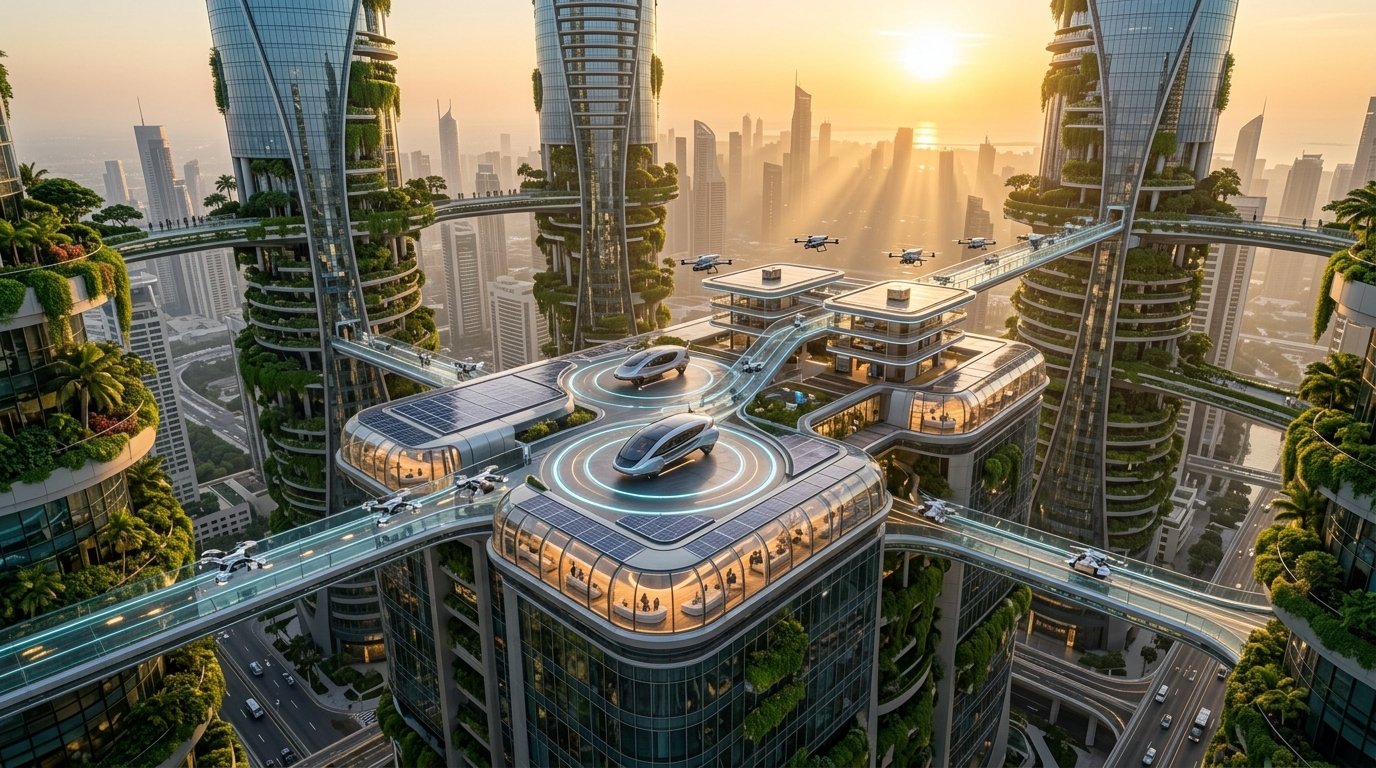
Every major skyscraper in 2050 features an integrated aerial docking deck. These streamlined skyports serve as both passenger terminals for autonomous aerial transit and automated hubs for high-speed delivery drones. Packages, medical supplies, and fresh produce arrive directly at building-level drop zones, taking thousands of delivery trucks off city streets.
7. Solar-Skin & Kinetic Energy Towers
Tomorrow’s towers don’t just consume electricity—they generate it. Clad in transparent photovoltaic glass and wind-harvesting micro-turbines, buildings in zero-emission smart cities act as vertical power plants. Excess clean energy generated during peak daylight hours is stored in solid-state structural batteries or beamed directly to charging pads for the city’s fleet of sky cruises and air taxis.
8. Atmospheric Water-Harvesting Spires
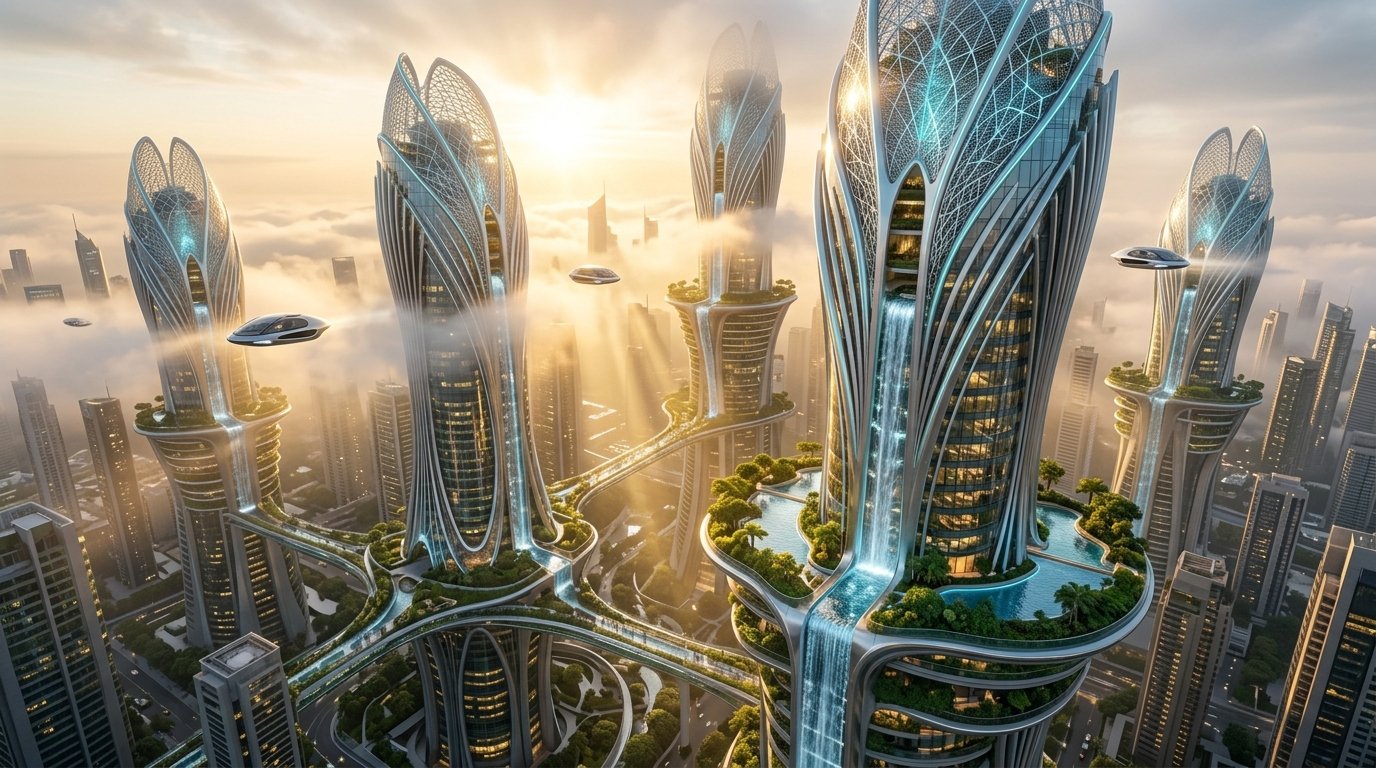
As global cities seek climate resilience, supertall architectural spires are designed with biomimetic meshes inspired by desert beetles and spider silk. These towering structures pull millions of gallons of pure drinking water directly from morning fog and humid air currents, supplying zero-emission smart cities with a renewable local water source high above ground level.
9. Modular Self-Healing & Shape-Shifting Facades
Using programmable smart materials and robotic maintenance swarms, the futuristic city skyline 2050 is dynamic rather than static. Exterior facades automatically shift tint and angle throughout the day to block harsh midday heat or maximize winter sunlight, while self-healing bio-concrete seals micro-cracks before they ever require human repair.
10. Stratospheric Edge-of-Space Observation Lounges
At the pinnacle of the future of urban tourism 2050, suborbital skyports launch pressurized luxury capsules to the edge of the stratosphere—over 30 kilometers above Earth. Passengers sip beverages in near-zero gravity while watching the curvature of the planet and the glowing futuristic city skyline 2050 far below, returning smoothly to the city’s central skyport in under two hours.