







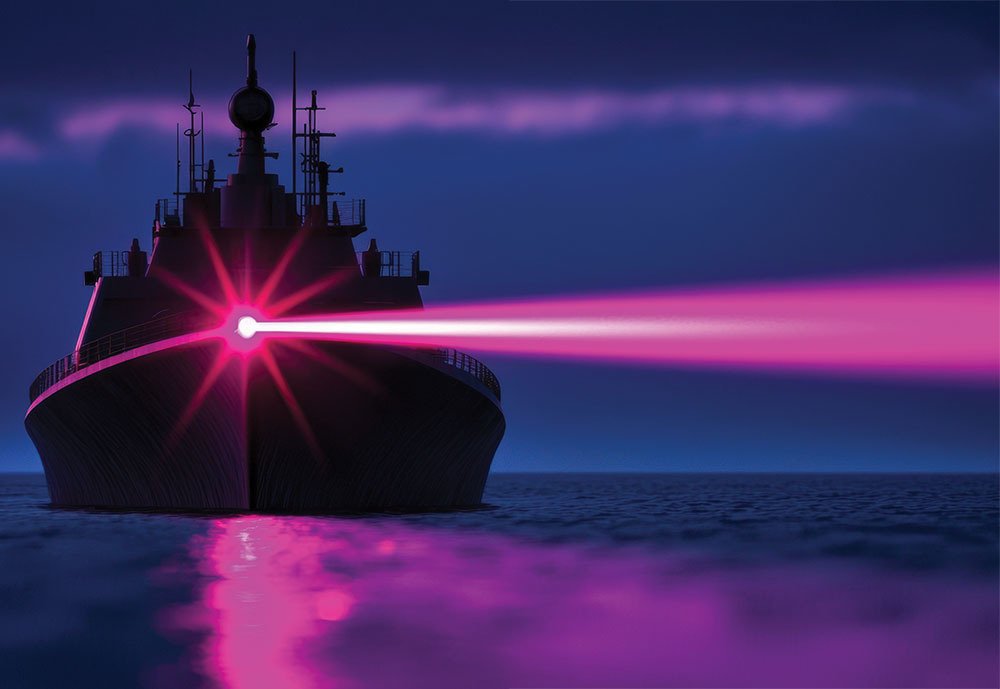
Laser weapon technology also known as directed energy weapons (DEW) or high-energy laser (HEL) systems represents one of the most transformative advancements in military technology. These systems fire concentrated beams of light at the speed of light to destroy, disable, or deter threats like drones, missiles, rockets, and small boats. Unlike traditional kinetic weapons, laser weapons offer near-instantaneous engagement, precision targeting, and dramatically lower costs per shot (often just dollars versus thousands for missiles).
As of 2026, laser weapon systems have moved from science fiction to battlefield reality. Over 18 countries publicly possess high-energy laser weapons, with the United States and China leading in scale and deployment. Nations are racing to integrate them for counter-drone operations, ship defense, and air/missile protection amid rising asymmetric threats.
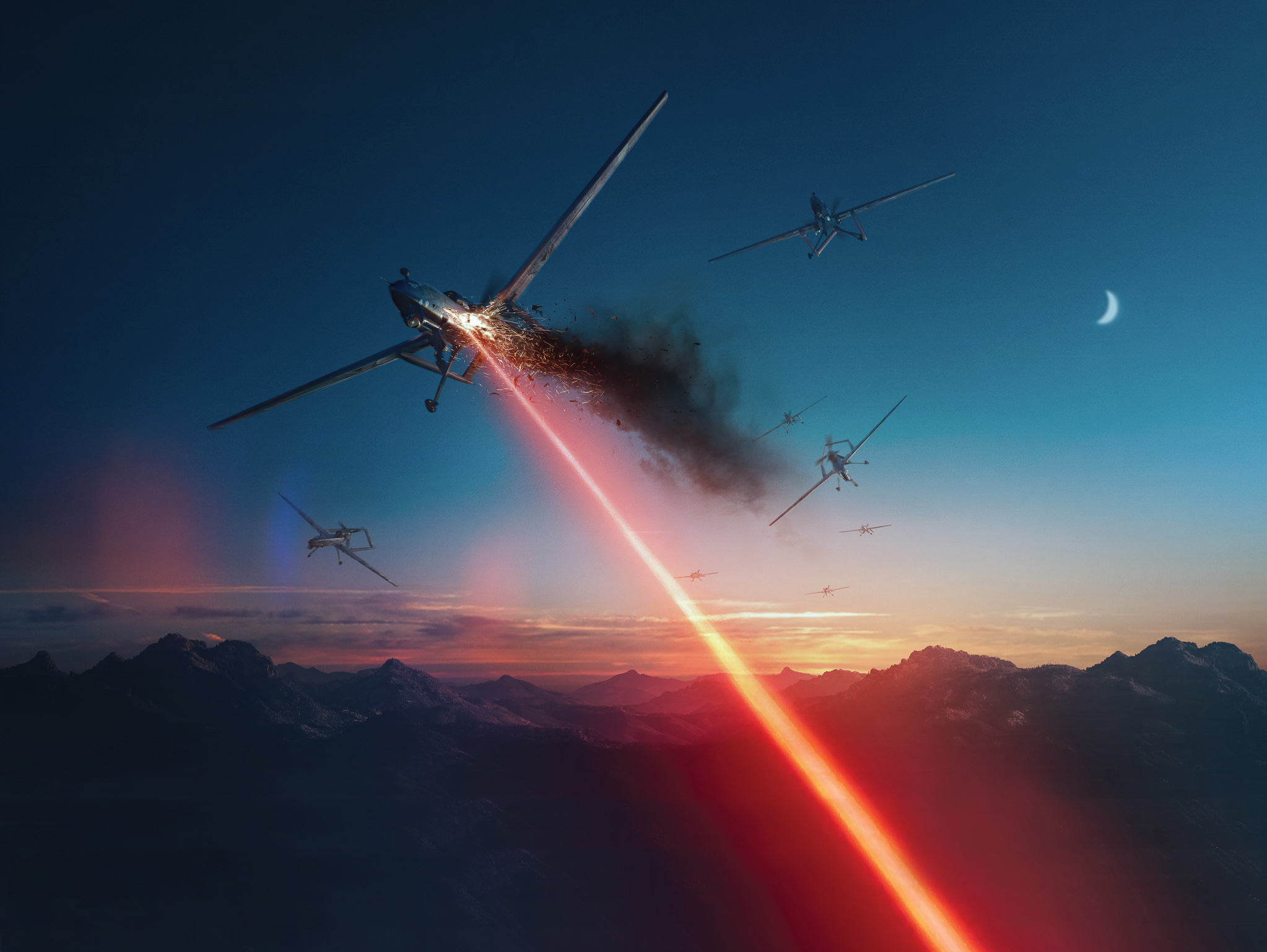
How Laser Weapon Technology Works
Laser weapons generate intense beams of coherent light (typically fiber, solid-state, or chemical lasers) that heat targets to extreme temperatures, causing structural failure, electronics meltdown, or ignition. Key types include:
- Fiber lasers (most common today): Efficient, scalable, and rugged.
- Solid-state lasers: Compact for vehicle/ship integration.
- High-power microwave variants: Part of broader DEW family for disabling electronics.
Power levels range from 10–150+ kW for tactical systems to 300+ kW for advanced prototypes. They excel against low-cost swarms but face challenges like atmospheric attenuation (fog, dust, rain) and massive power demands.
Advantages of laser weapons:
- Infinite magazine (as long as power is available).
- Precision with minimal collateral damage.
- Cost-effective: ~$1–10 per engagement vs. $100,000+ for missiles.
- Speed-of-light delivery for time-critical threats.
Limitations:
- Weather-dependent performance.
- Line-of-sight requirement.
- High initial R&D and power infrastructure costs.
Brief History of Laser Weapons
Early concepts date to the 1980s Strategic Defense Initiative (“Star Wars”). Practical systems emerged in the 2010s with the US Navy’s LaWS on USS Ponce (2014). By 2025–2026, operational deployments accelerated due to drone proliferation in conflicts like Ukraine and the Middle East.
Countries Leading in Laser Weapon Technology
Here are the nations capable of developing, testing, or deploying military-grade laser weapons as of mid-2026. The US and China dominate in quantity and advancement, while others focus on specialized systems.
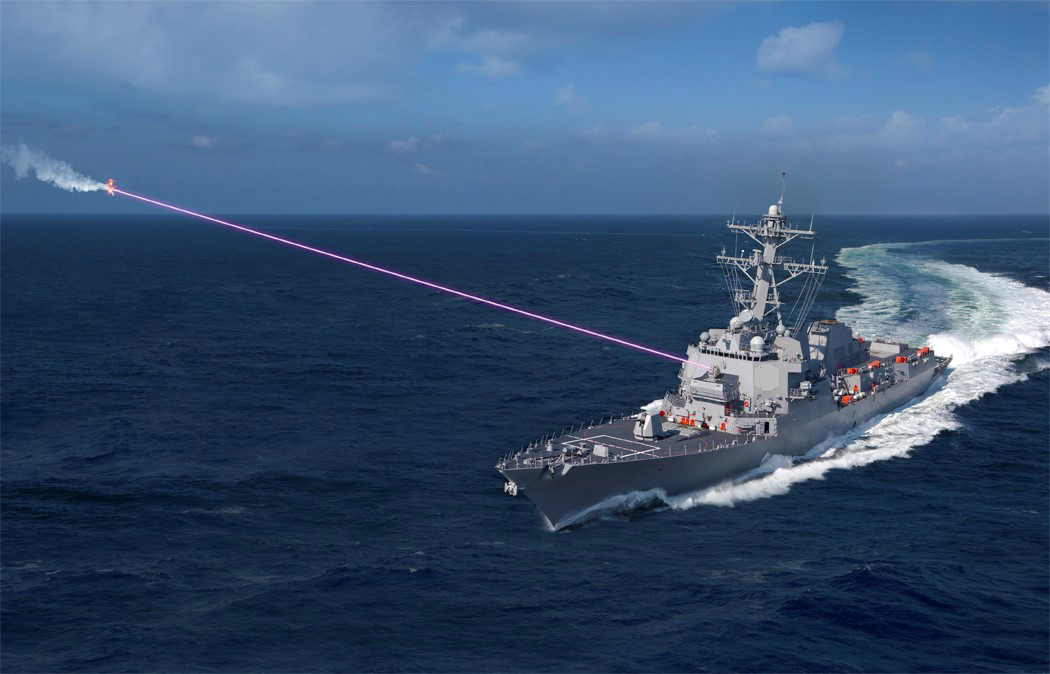
United States The global leader with dozens of programs across Army, Navy, and Air Force. Key systems include:
- HELIOS (60–150+ kW fiber laser on destroyers for anti-drone/boat defense).
- DE M-SHORAD (50 kW on Stryker vehicles).
- AMP-HEL and Joint Laser Weapon System (containerized 150 kW+ for cruise missiles). Dozens of systems are operational or in advanced testing.
China Rapidly scaling production with industrial advantage. Notable systems:
- LY-1 shipborne high-energy laser (unveiled 2025).
- Silent Hunter and Guangjian-21A vehicle-mounted systems (exported widely). China leads in exports and has deployed systems on ships and vehicles.
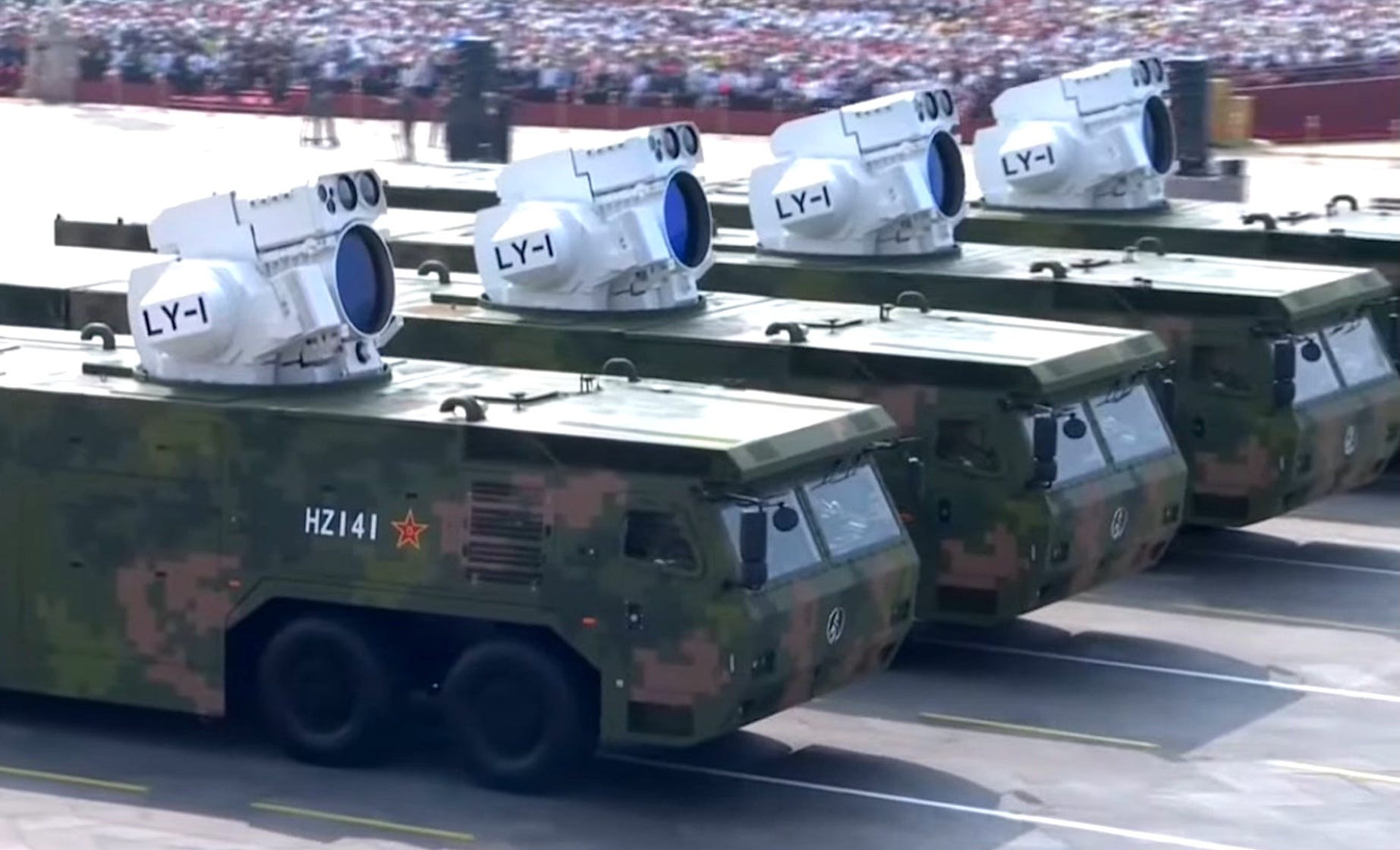
Russia Operational since 2019 with the Peresvet mobile laser system, designed for anti-satellite and air defense roles. Russia has integrated Chinese-made lasers for drone defense in recent conflicts.

Israel Pioneer in operational high-power systems. The Iron Beam (100 kW) is the world’s first combat-ready laser air-defense system, successfully tested against drones and rockets. It has been deployed/exported (e.g., to UAE) and provides near-term protection at low cost.
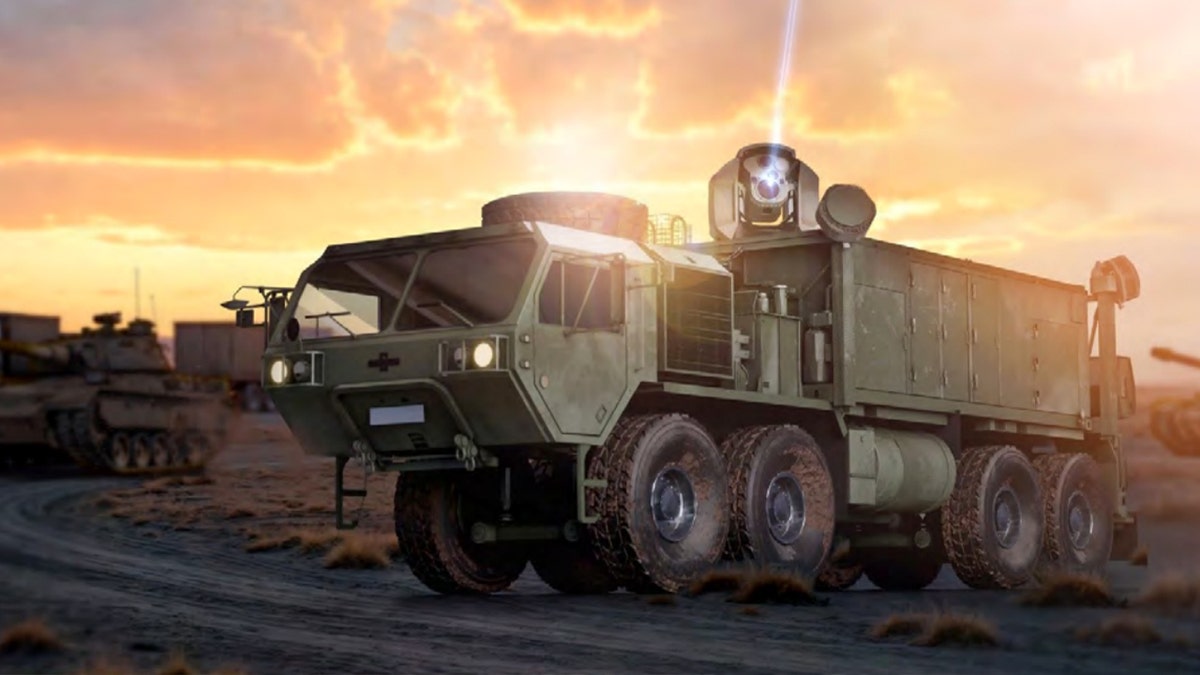
United Kingdom DragonFire laser directed energy weapon has completed successful high-power trials (including precision strikes at long range). Planned for Royal Navy deployment by 2027.
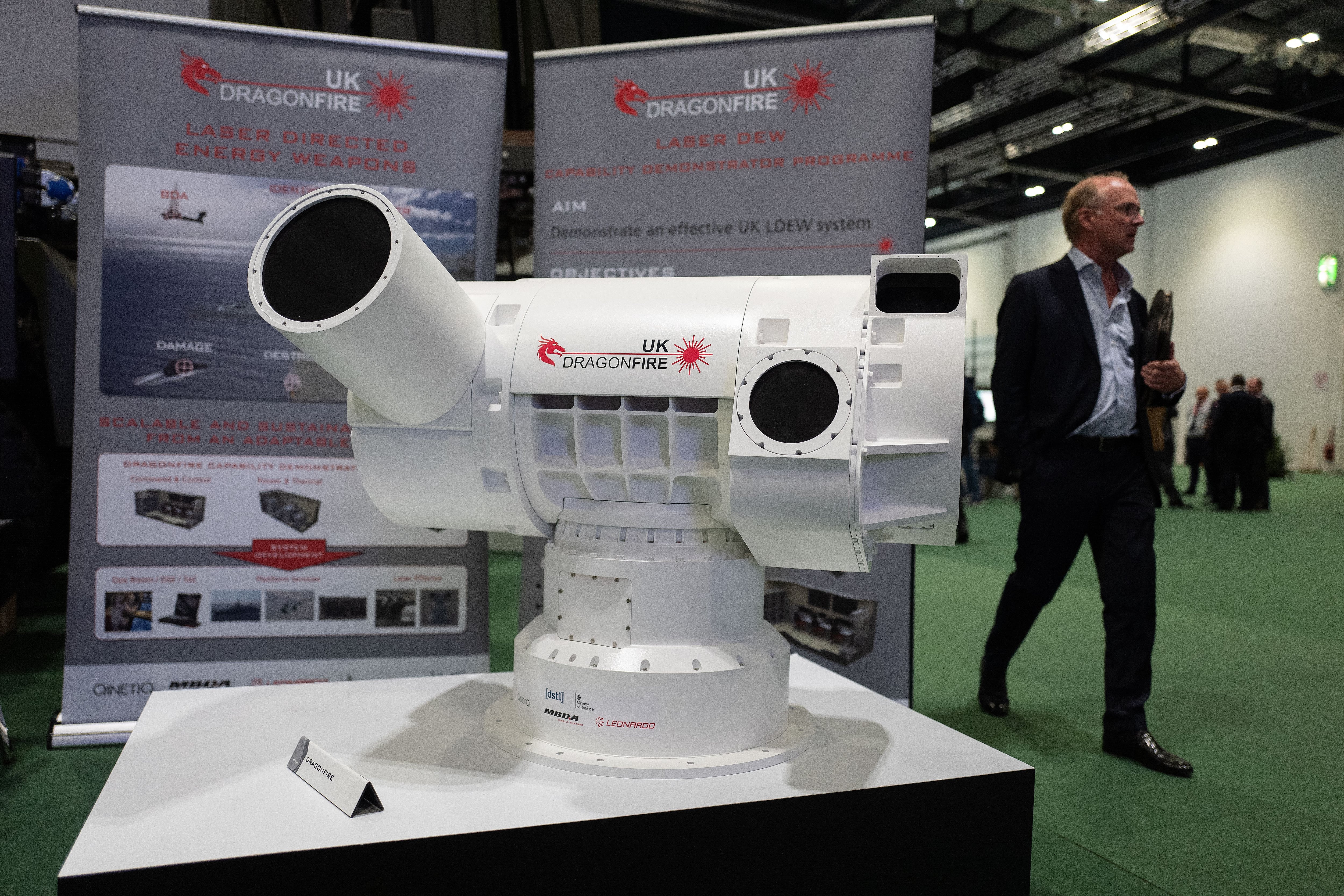
Other Capable Nations:
- France: HELMA-P counter-drone laser demonstrator; active development contracts.
- Germany: Naval laser weapon demonstrator tested on frigates; Rheinmetall/MBDA collaboration targeting 2029 service.
- India: DRDO’s Integrated Air Defence Weapon System and Mk-II laser tested successfully.
- Japan: 100 kW laser trials on warships and combat trucks; deployed on Aegis destroyers.
- South Korea: First nation to mass-produce laser weapons (Block-I system) with 100% test success rate.
- Turkey: ALKA directed-energy system claimed first combat use (2019); part of Steel Dome.
- Ukraine: Rapidly developed and deployed Tryzub anti-drone laser.
- Iran: Claims active service of laser weapons.
- Additional possessors/acquirers (part of the 18+): UAE (Iron Beam + Chinese + US systems), Saudi Arabia (Silent Hunter), Indonesia (laser rifles), Spain (development programs).
Current Applications and Real-World Impact
Laser weapons excel in counter-UAS (unmanned aircraft systems), naval defense, and short-range air defense. Deployments in the Middle East (UAE, Israel) and Europe demonstrate their value against drone swarms. The UAE now operates systems from Israel, China, and the US simultaneously.
The Future of Laser Weapon Technology
By 2030, expect megawatt-class systems, swarm integration with AI, and space-based applications. Challenges remain in power generation, beam quality, and international arms control, but the “industrial era” of laser weapons has arrived.
Ethical and Strategic Considerations: While offering precise, low-collateral defense, proliferation raises questions about escalation and arms races. Nations must balance innovation with responsible use.
Laser weapon technology is no longer futuristic—it’s here, reshaping defense strategies worldwide. From the US HELIOS to Israel’s Iron Beam and China’s LY-1, these systems promise cheaper, faster protection in an era of drone-heavy conflicts.
Stay informed on the latest in laser directed energy weapons as the global race intensifies.