







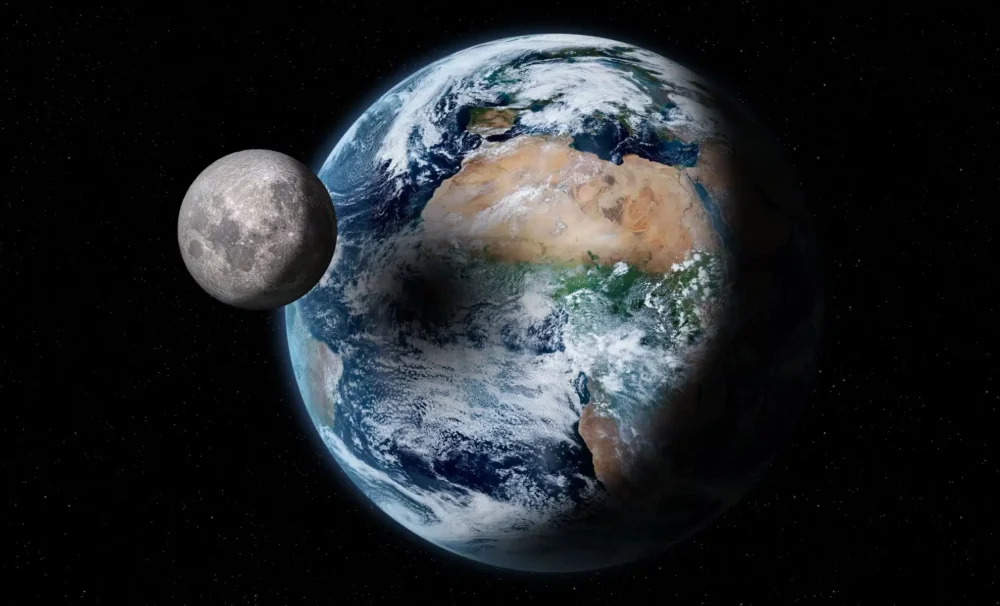
The Moon is drifting away from Earth — and scientists are watching it happen in real time. Every single year, our lunar neighbor pulls 1.5 inches (3.8 cm) farther away. This isn’t a theory. It’s proven science that will reshape our planet’s future in ways you won’t believe.

From massive ocean tides to longer days and the eventual end of total solar eclipses, the Moon moving away from Earth is one of the most mind-blowing facts in planetary science. Ready to dive deep into why this is happening and what it means for humanity?
How We Know the Moon Is Drifting Away (Laser Precision from Apollo)
Apollo astronauts left special mirrors on the Moon. Today, scientists fire lasers at them from Earth and measure the return time with insane accuracy. Result? The Moon receding rate is locked in at 1.5 inches per year — and it’s been doing this for billions of years.
Earth and Mars Are Cosmic Siblings: New 2026 Study Reveals Shared Inner Solar System Origins
Mars Shortcut 153 Days: Asteroid 2001 CA21 Unlocks Fastest Round-Trip to Mars by 2031
The Mind-Blowing Reason: Tidal Forces Are Pushing the Moon Away
Earth spins faster than the Moon orbits. The Moon’s gravity creates giant tidal bulges in our oceans. Those bulges get dragged ahead by Earth’s rotation and actually “tug” the Moon forward, boosting its orbit higher and farther away.
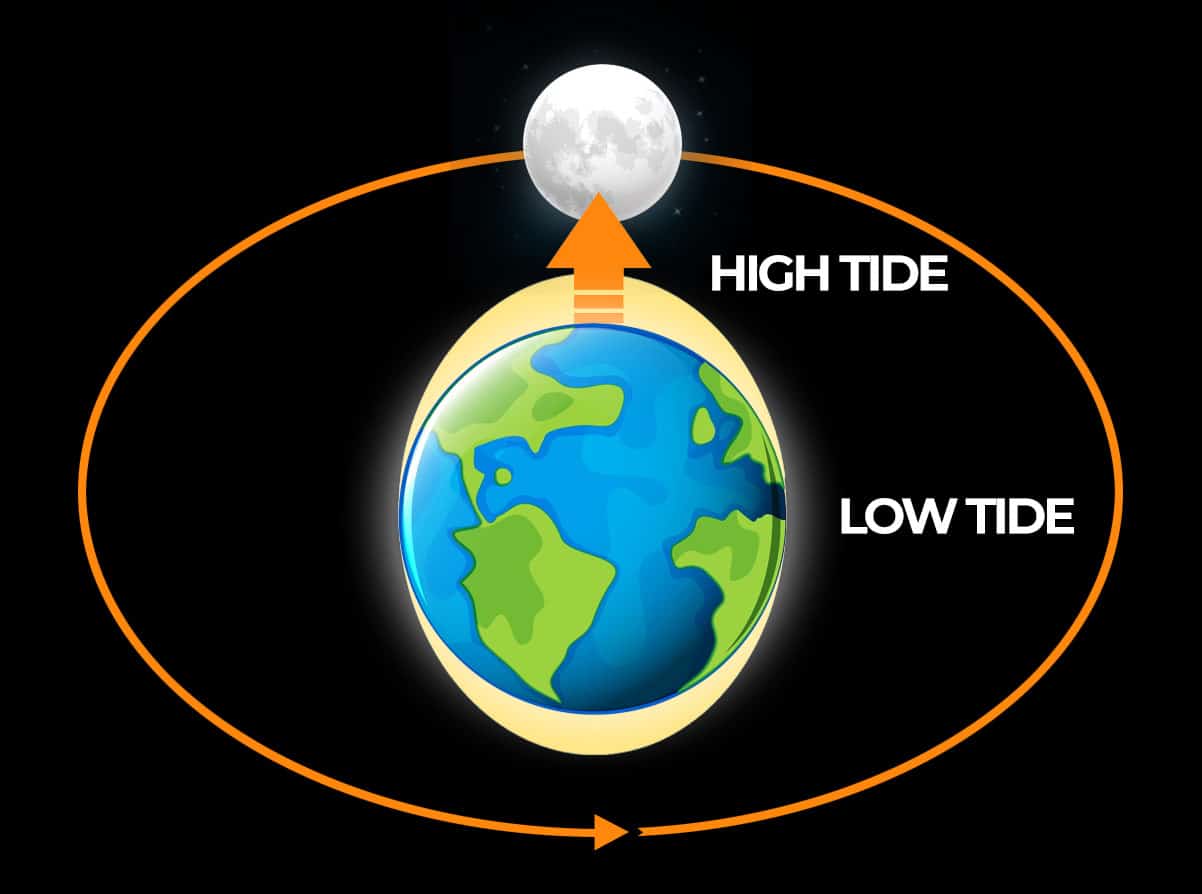
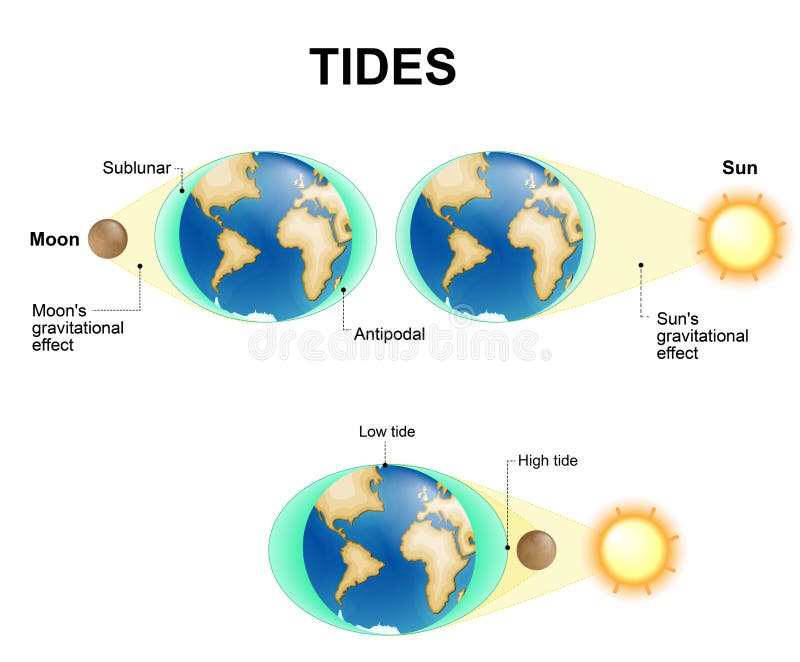
In return, Earth’s rotation slows down — making our days microscopically longer every century. It’s the ultimate cosmic energy trade!
Billions of Years Ago: The Moon Was So Close It Dominated the Sky
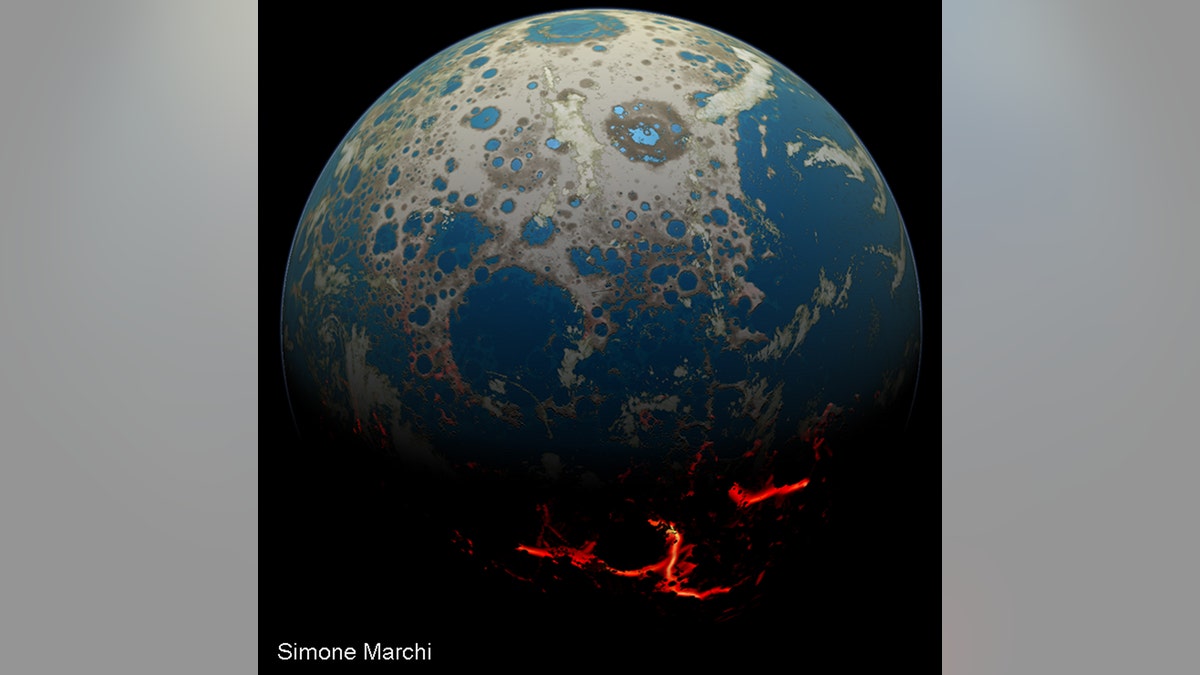
Right after it formed 4.5 billion years ago in a giant cosmic collision, the Moon was dramatically closer. Dinosaurs saw a much bigger Moon hanging huge in the sky — and days were shorter (only about 23.5 hours 70 million years ago).
Today’s Real-World Effects: Bigger Tides, Longer Days & Epic Supermoons
The Moon drifting away from Earth already affects:
- Powerful ocean tides that shape coastlines worldwide
- Slightly longer days (you won’t notice… yet)
- Breathtaking supermoons that light up the night sky like never before

The Dramatic Future: Total Solar Eclipses Will Vanish in 600 Million Years
As the Moon moves farther out, it will look smaller in our sky. In about 600 million years, it won’t be able to fully cover the Sun anymore. Total solar eclipses — those awe-inspiring events we love — will be gone forever.
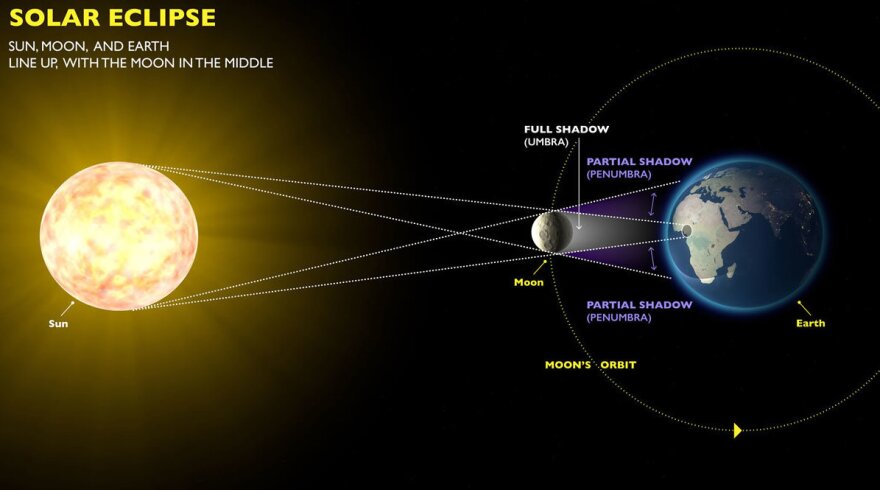
Long-term? The Moon will stay locked in orbit for billions of years, but our Sun will eventually expand and likely swallow both Earth and the Moon.
Why Everyone’s Suddenly Searching “Moon Drifting Away from Earth”
People can’t stop Googling Moon moving away, lunar recession rate, why is the Moon drifting, and future of solar eclipses. It’s one of those cosmic facts that makes you look up at the night sky in total wonder.
The changes are tiny in human lifetimes — but they remind us how beautifully connected Earth and the Moon really are.
What do YOU think about the Moon slowly leaving us? Drop your thoughts below and keep staring at the stars — our cosmic dance partner is still putting on one hell of a show! 🌕